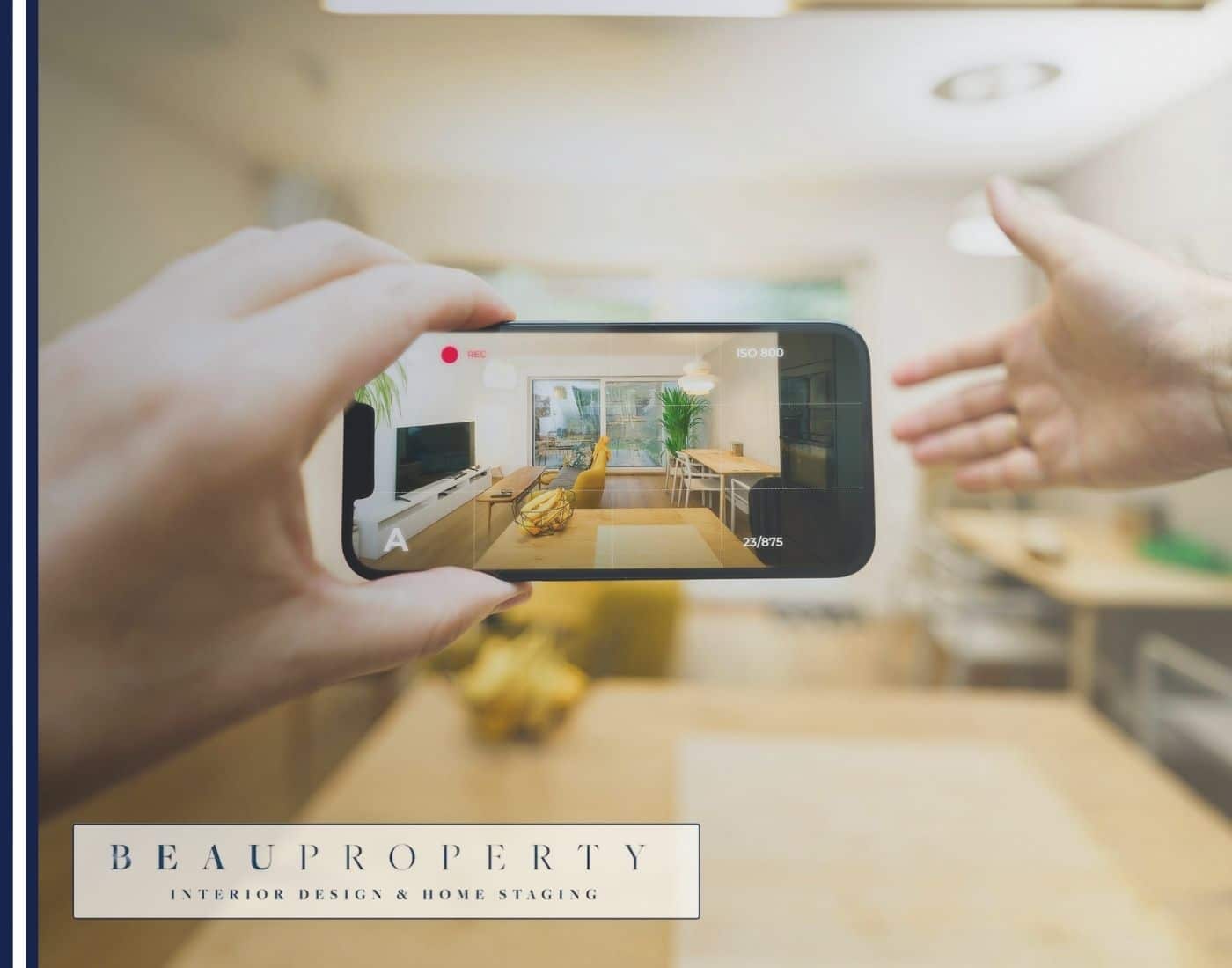
If you have invested in professionally staging a property, a 3D virtual tour is one of the most effective ways to make that investment work harder. It allows every potential buyer to experience the staged home in full, on their own terms, before they ever step through the front door.
This guide covers how 3D tours work, why they pair so well with physical staging, how to prepare a staged property for scanning, and what the data actually says about their impact on sales.
What Is a 3D Virtual Tour?
A 3D virtual tour is an interactive, self-guided walkthrough of a property that buyers can explore from their phone, tablet, or laptop. Unlike a video walkthrough – where the viewer passively watches a pre-recorded route through the home – a 3D tour puts the buyer in control. They choose where to go, which room to look at next, and how long to spend in each space.
That distinction matters. A video walkthrough shows buyers what the filmmaker wanted them to see, in the order the filmmaker chose. A 3D tour lets them browse the way they would during a physical viewing – lingering in the kitchen, checking the view from the bedroom window, going back to the living room for a second look. It is closer to being there than any other digital format.
How They Are Created
The most widely used platform in the UK property market is Matterport. A specialist photographer uses a 3D camera to capture the property from multiple positions – typically every few metres throughout the home. The camera records both high-resolution imagery and spatial depth data, which the software then stitches together into a seamless, navigable 3D model.
The entire scan of a typical three-bedroom house takes around 60 to 90 minutes. The processed tour is usually available within 24 to 48 hours. Buyers can then explore it via a simple web link – no app download, no special equipment required.
Other platforms include EyeSpy360, which offers a more budget-friendly approach using 360-degree photography rather than true 3D depth scanning. The result is less spatially accurate but still a significant step up from static photographs.
For a wider view of how these technologies fit into the modern staging toolkit, our guide to the broader role of technology in staging covers the full landscape.
Why 3D Tours and Physical Staging Belong Together
A 3D tour of an empty property is functional. A 3D tour of a professionally staged property is compelling. The difference between the two is substantial, and it comes down to what buyers are actually responding to when they explore a listing.
Empty Homes Fall Flat in 3D
An empty room photographed well can still look acceptable – a skilled photographer controls the angle, the light, and the framing. But in a 3D tour, the buyer controls the view. They can look at the room from every direction. And empty rooms explored in 3D tend to feel cold, featureless, and difficult to gauge in terms of scale. Without furniture, buyers struggle to judge whether a room is generous or cramped.
Staged Homes Come Alive
When a property has been staged, every room in the 3D tour has context. The living room has a sofa that demonstrates scale. The dining area has a table that shows the space can comfortably seat six. The bedroom has a bed, side tables, and soft furnishings that make it feel like a place someone would actually want to sleep. Buyers engage with the tour for longer, return to it more often, and arrive at physical viewings with a much clearer sense of the home.
The combination – professional staging captured through a 3D tour – is where the real advantage lies. You are not just showing buyers a property. You are giving them an experience of living in it, available 24 hours a day from anywhere in the world.
This pairing is especially powerful when compared to virtual home staging, where furniture is digitally added to photographs. Virtual staging works well for still images, but it cannot populate a 3D tour in the same way. Only physical staging gives the tour its full visual and spatial impact.
UK Portal Integration: A Competitive Listing Advantage
One of the most practical reasons to invest in a 3D tour is that the major UK property portals now actively support them.
Rightmove allows agents to embed 3D tours directly into listings, and these listings receive a dedicated “Virtual Tour” tag that makes them stand out in search results. Zoopla similarly supports embedded tours and highlights them with visual badges. OnTheMarket also integrates 3D tour links, giving buyers immediate access from the listing page.
This matters because portal visibility is everything in UK property marketing. A listing with professional photographs, a digital floor plan, and an embedded 3D tour occupies more visual space, generates more clicks, and holds attention for longer than a listing with photos alone.
For estate agents, offering 3D tours as part of their marketing package is increasingly expected rather than exceptional. Firms like Strutt and Parker have integrated virtual viewings into their standard service for higher-value properties. Chancellors and many independent agents across the South East now include 3D tours as a standard listing feature. If your property does not have one, it risks looking under-marketed compared to the competition.
What the Data Says
The performance statistics around 3D virtual tours are difficult to ignore.
- Properties with 3D tours sell up to 31% faster than those marketed without them, according to Matterport’s own property data
- 95% of buyers are more likely to enquire about a listing that includes an interactive 3D tour
- Listings with 3D tours receive 87% more views than equivalent listings with photographs only
These are not marginal improvements. For sellers who have already committed to staging, photography, and a floor plan, adding a 3D tour is the step that ties the entire marketing package together and maximises the return on every other element.
The impact is particularly pronounced for properties in the higher price brackets, where buyers are more discerning and more likely to conduct extensive online research before committing to a viewing. It is also significant for properties targeting relocating or overseas buyers, who may need to make decisions remotely.
How to Prepare a Staged Property for a 3D Scan
Getting the most from a 3D tour starts well before the camera arrives. The scanning process captures everything in the property exactly as it is – there is no post-production retouching or selective cropping as there might be with traditional photography. That means preparation is critical.
Lighting
Natural light produces the best results in 3D scans. Schedule the scan for the time of day when the property receives the most even, natural light – typically mid-morning or early afternoon, depending on the orientation of the home. Avoid late afternoon when low sun can create harsh shadows and blown-out windows.
Turn on all interior lights to fill any shadowed corners, but avoid coloured or overly warm bulbs that might give rooms an unnatural cast. If the property has dimmer switches, set them to full brightness.
Staging Details
Because buyers can look in every direction during a 3D tour, the staging needs to be thorough. Areas that might sit outside the frame of a traditional photograph – the corner behind the door, the top of a bookshelf, the far end of a hallway – are all visible and explorable.
Check every room for:
- Stray items – Remove anything that is not part of the staging scheme. Phone chargers, cleaning products, leaflets, and personal items will all show up
- Symmetry and alignment – Cushions, towels, and table settings should be neatly arranged. The 3D camera is unforgiving of anything that looks hastily placed
- Reflective surfaces – Mirrors and glass can sometimes create visual artefacts in 3D scans. Ensure mirrors are clean and be aware that the camera and photographer may be visible in reflections
Doors and Access
Open all internal doors to allow the 3D camera a clear sightline between rooms. This creates a more natural flow when buyers navigate the tour. Close any doors to utility cupboards, boiler rooms, or storage areas that are not part of the staged presentation.
Outdoor Spaces
If the property has a garden, patio, or balcony, include these in the scan. Staged outdoor spaces – even simply a bistro table and a pair of chairs – add significant appeal in the tour. Ensure bins are stored away, garden tools are tidied, and any outdoor furniture is clean and well-positioned.
Temperature
This is an often-overlooked detail. If the property is cold, condensation on windows may appear in the scan. In winter, turn the heating on well in advance so the property is warm and dry throughout.
3D Tours for Show Homes and New Builds
For developers marketing new-build schemes, 3D tours serve a dual purpose. The physical show home can only be visited during opening hours and by buyers who can travel to the site. A 3D tour of the staged show home extends that experience to every potential buyer, at any time.
This is especially valuable for show home staging projects where the developer has invested significantly in the presentation of one or two key plots. A 3D tour captures that investment permanently, even after the show home is eventually sold.
For developments where different house types share a similar layout, a single 3D tour of the staged show home can serve as a selling tool for multiple plots. Buyers exploring the tour can visualise their own unit with confidence, knowing the dimensions and layout match what they are considering.
Choosing the Right Provider
When selecting a 3D tour provider, look for the following:
- Property-specific experience – A provider who regularly scans residential properties will understand staging, lighting, and the angles that matter to buyers. Corporate or commercial scanning experience does not always translate
- Platform quality – Matterport remains the industry standard for spatial accuracy and user experience. If a provider uses an alternative platform, check the output quality carefully before committing
- Turnaround time – For properties that need to go to market quickly, a 24 to 48 hour turnaround from scan to live tour is ideal
- Portal compatibility – Confirm that the final tour format is compatible with Rightmove, Zoopla, and OnTheMarket embedding requirements
- Hosting and longevity – Understand how long the tour will remain live and whether there are ongoing hosting costs. Some providers include 12 months of hosting in their fee; others charge monthly
Where 3D Tours Fit in Your Marketing Package
A 3D tour is not a replacement for professional photography, a floor plan, or well-written property particulars. It is the layer that ties them all together. The ideal marketing package for a staged property looks like this:
- Professional staging – Creating the emotional impact that drives buyer interest
- Professional photography – Capturing the staged property in its best light for portal listings and print materials
- Digital floor plan – Providing the spatial clarity and room dimensions that buyers need for practical decision-making
- 3D virtual tour – Delivering the immersive, interactive experience that bridges the gap between online browsing and physical viewing
- Compelling property description – Telling the story of the home and the lifestyle it offers
Each element serves a distinct purpose. Remove any one of them and the overall package is weaker. But if you had to choose one element to add to an existing staging and photography package, the 3D tour would deliver the most significant uplift in buyer engagement.
For a detailed comparison of how digital and physical approaches to staging complement each other, see our guide to virtual staging versus physical staging.
Getting Started
If you are selling a property that has been professionally staged – or planning to stage one soon – speak to your estate agent about including a 3D tour in the marketing package. Many agents now have preferred scanning partners, or your staging company may be able to recommend a provider they have worked with before.
The key is to coordinate the timing. The staging needs to be fully installed and the property immaculately prepared before the scan takes place. Ideally, the 3D scan happens on the same day as the professional photography session, when the staging is fresh and every detail is in place.
The investment is modest relative to the staging itself, but the return – in terms of online engagement, enquiry rates, and speed of sale – is consistently strong. For properties in Kent, Sussex, and Surrey, where competition among listings is fierce, it is an advantage that is increasingly difficult to justify leaving on the table.