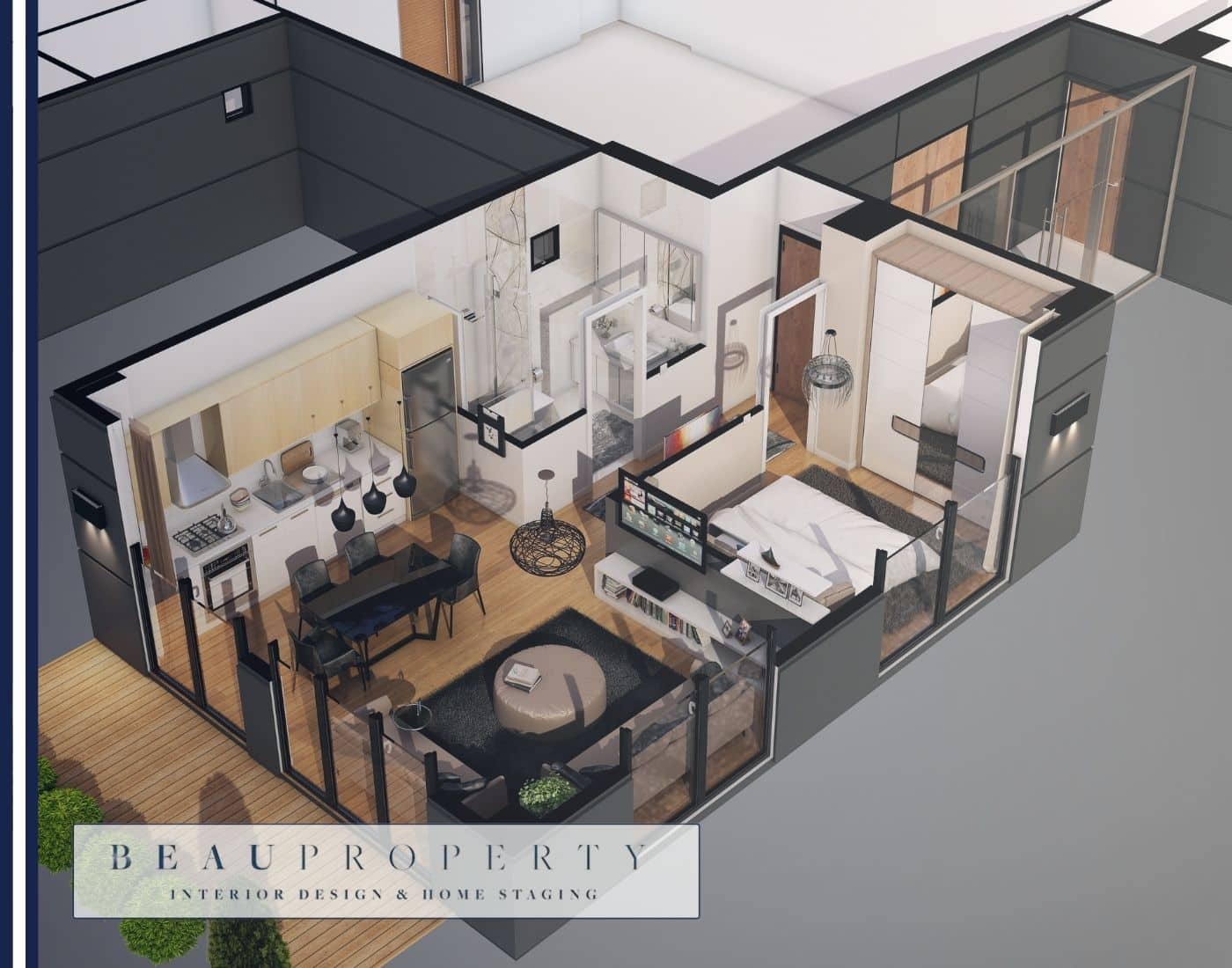
Technology has become inseparable from the way properties are marketed and sold in the UK. From the moment a listing goes live to the point a buyer makes an offer, digital tools shape every stage of the journey. With 97% of buyers now searching for homes online, the properties that attract the most interest are those presented with the right combination of physical appeal and digital reach.
For homeowners, estate agents, and developers, understanding which technologies genuinely add value – and which are simply noise – is essential. Not every tool suits every property or every budget. What matters is knowing how each piece fits together and where to invest for the strongest return.
This guide covers the full landscape of technology in home staging, from the tools that are already standard practice to the emerging innovations that are beginning to reshape the industry. At every level, the same principle holds: technology works best when it amplifies great presentation, not when it tries to replace it.
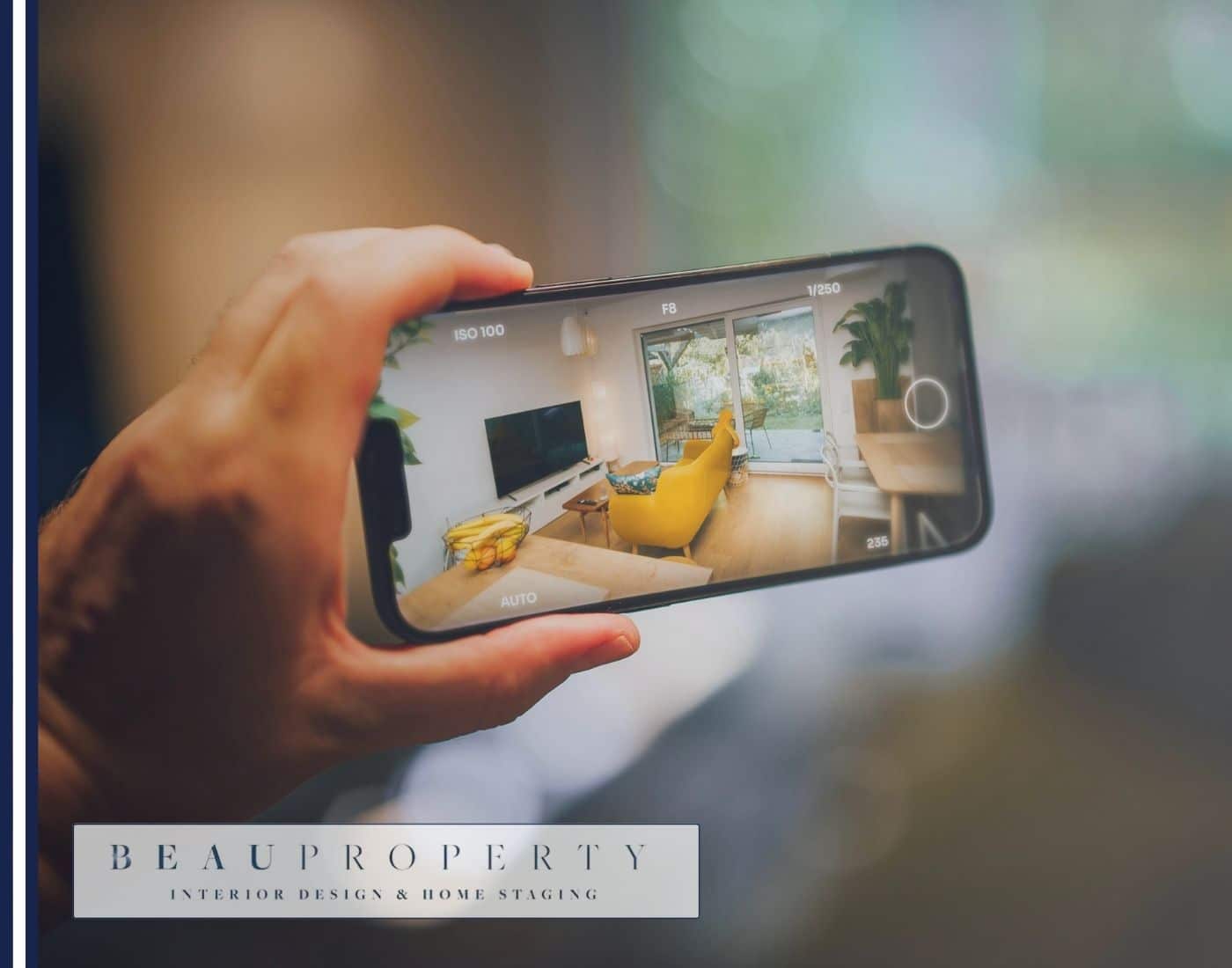
Virtual Staging: Digital Furniture for Digital Listings
Virtual staging has grown from a niche curiosity into a significant industry. The global virtual staging market is valued at an estimated $1.33 billion in 2026, growing at a compound annual rate of 13.51%. The appeal is straightforward – digitally furnished images of empty rooms can increase listing click-through rates by up to 90%, giving vacant properties a fighting chance against those that have been physically staged.
The technology works by adding realistic furniture, decor, and styling to photographs of empty rooms. Done well, the results are convincing enough to stop a buyer mid-scroll and prompt them to read on. It is particularly useful for properties where physical staging is not practical – perhaps due to budget constraints, tight timescales, or the property being occupied and in need of a visual refresh for the listing.
However, virtual staging has clear limitations. It exists only in photographs. When a buyer arrives for a viewing and finds empty rooms, the disconnect between the listing and the reality can work against the sale rather than for it. The most effective approach uses virtual staging strategically as part of a broader marketing plan. For a full breakdown of how it works, when to use it, and the pitfalls to avoid, read our complete guide to virtual home staging. We also cover how digital and physical methods compare in our analysis of virtual staging versus physical staging.
3D Virtual Tours: Letting Buyers Explore Remotely
3D virtual tours have moved from premium add-on to near-standard practice in UK property marketing. The data supports their adoption – properties with 3D tours sell up to 31% faster than those without. For buyers who cannot easily visit in person, whether they are relocating from another region or browsing from overseas, a navigable 3D model of the property provides a level of understanding that photographs alone cannot match.
The technology, led by platforms such as Matterport, creates a detailed digital replica of a property that buyers can explore room by room from any device. They can pan around, move through doorways, and get a genuine feel for spatial flow and room proportions. When the property has been professionally staged before scanning, the tour captures not just the space but the lifestyle it represents.
3D tours are especially valuable for properties with complex or unusual layouts where standard photography struggles to convey how the rooms connect. They also pair naturally with digital floor plans, giving buyers both the immersive experience and the measured clarity they need to make informed decisions. For a detailed look at the technology, costs, and best practices, see our guide to 3D virtual tours.
Augmented Reality: Bridging the Physical and Digital
Augmented reality sits at the intersection of what is real and what is possible. Unlike virtual staging, which exists only in photographs, or VR, which replaces reality entirely, AR overlays digital elements onto the real world in real time. For property staging, this opens up possibilities that neither purely physical nor purely digital methods can achieve on their own.
How AR Works in a Staging Context
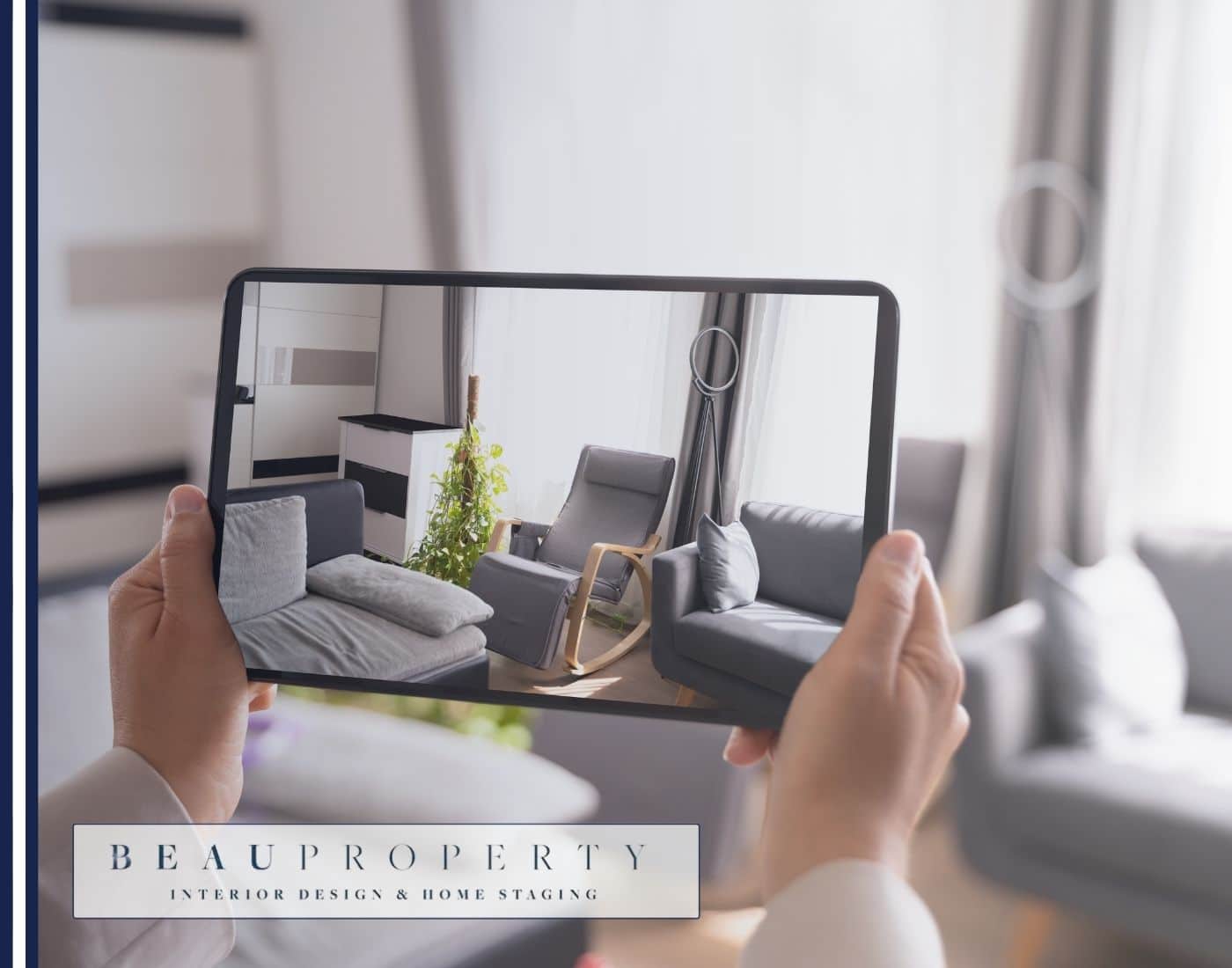
The concept was brought to mainstream attention by apps like IKEA Place, which let users point their smartphone camera at a room and see how a piece of furniture would look in the space, rendered to scale and adjusted for perspective. In staging terms, AR takes this idea much further. A buyer standing in a vacant room during a viewing could hold up their phone or tablet and see the space furnished – sofas arranged around a fireplace, a dining table set for six, artwork on the walls – all overlaid on the live camera view.
This bridges the gap between virtual and physical staging in a way that neither can do alone. Physical staging creates a fixed presentation. Virtual staging exists only in photos. AR lets buyers interact with a digital layer while standing in the actual property, giving them both the real spatial experience and the styled vision simultaneously.
Practical Applications for the UK Market
AR technology in property is still maturing in the UK, but adoption is accelerating. The most practical applications currently include:
- Vacant property viewings – buyers can visualise furnished rooms on their device while walking through an empty property, helping them connect with the space without the cost of full physical staging
- Personalisation during viewings – rather than presenting a single design scheme, AR allows buyers to switch between styles, swap colour palettes, or try different furniture arrangements, making the experience feel tailored to their taste
- New build specification choices – for developments offering multiple finish options, AR can show buyers what different kitchen worktops, flooring, or bathroom tiles would look like in situ, reducing uncertainty and speeding up specification decisions
- Supporting staged properties – even in a physically staged home, AR can demonstrate alternative uses for a room – showing a spare bedroom configured as a home office, for example, without physically restaging the space
Where AR Stands Today
The technology is not yet seamless. Lighting conditions, room size, and device capability all affect the quality of the AR overlay, and the experience varies between apps and platforms. But the trajectory is clear. Smartphone cameras and processing power improve with every generation, and the gap between a rough AR overlay and a convincing, spatially accurate visualisation is closing quickly.
For staging professionals and estate agents, AR represents an opportunity to offer buyers a richer viewing experience without dramatically increasing costs. The properties that adopt it early will stand out in listings and at viewings, particularly among younger, tech-comfortable buyers who expect digital interactivity as standard.
Virtual Reality: Immersive Walkthroughs and Off-Plan Sales
While 3D tours let buyers navigate a property on screen, full virtual reality takes immersion to another level. Using a VR headset, a potential buyer can step inside a property and experience it as though they were physically present – looking around naturally, moving through rooms, and gaining a spatial awareness that flat screens cannot provide.
The Growing VR Market
The scale of investment in VR for real estate reflects genuine confidence in the technology. The global VR real estate market is projected to reach $2.6 billion by 2026, and an estimated 1.4 million estate agents worldwide are expected to be using VR tools by 2025. However, adoption remains uneven. Only around 15% of firms currently use digital twin technology, which means VR is still in its early stages and far from standard practice in the UK residential market.
Where VR Delivers the Most Value
VR is at its most powerful in situations where the physical property does not yet exist or cannot be easily visited.
Off-plan and new build marketing is the strongest use case. Developers can create fully rendered VR walkthroughs of properties that are still under construction – or not yet started – allowing buyers to experience room sizes, ceiling heights, natural light, and spatial flow long before completion. This pairs naturally with CGI specification design, where interiors are digitally visualised to help buyers understand exactly what they are purchasing. For developers marketing new build show homes, VR can extend the show home experience across an entire development, letting buyers explore specific plot types with the correct layouts and finishes for their chosen unit.
Overseas and relocating buyers represent the other key audience. A buyer in Dubai, Hong Kong, or Edinburgh can explore a property in Kent or Surrey in meaningful detail through VR, making it possible to shortlist – or in some cases make offers on – properties without travelling to view in person. When that VR walkthrough is based on a professionally staged interior, the emotional impact is significantly stronger than navigating through bare rooms.
Complex or high-value properties also benefit. Period homes with interconnected reception rooms, split levels, or extensions that wrap around courtyards can be difficult to convey through standard photography. VR allows potential buyers to understand the flow and character of the home before they visit, meaning they arrive at viewings already oriented and ready to appreciate the finer details.
The Limits of VR
For all its sophistication, VR cannot replicate the full experience of being in a room. It engages sight and spatial awareness convincingly, but it cannot reproduce the warmth of natural light on a south-facing wall, the feel of an oak floor underfoot, or the sense of calm that a well-staged bedroom creates through texture, scent, and scale. The emotional response that drives buying decisions is, ultimately, a physical one.
There is also a practical barrier. VR headsets, while improving, are not yet commonplace among UK property buyers. Most VR experiences in the residential market are offered at estate agency offices or show home sales suites rather than accessed independently by buyers at home. This limits reach compared to 3D tours, which run on any device with a web browser.
The evidence points clearly toward a hybrid approach. VR extends the reach and impact of marketing, particularly for new builds and remote audiences. Physical staging creates the in-person connection that closes sales. The properties that perform best are those that invest in both. As we explored in our look at home staging benefits, the emotional impact of a professionally presented property remains the single most powerful factor in achieving a strong sale price.
Social Media and Marketing Technology
The way properties reach buyers has changed as fundamentally as the way they are presented. Social media and digital marketing platforms have created new channels that did not exist a decade ago, and for staged properties, these channels are particularly effective.
Visual Platforms and Staged Content
Instagram, Pinterest, and TikTok are inherently visual platforms, and professionally staged properties are inherently visual content. This is not a coincidence – it is a strategic opportunity. A well-staged room is designed to photograph beautifully, which means it is also designed to perform on social media. The same principles that make a staged living room stop a buyer mid-scroll on Rightmove also make it stop a user mid-scroll on Instagram.
Estate agents and developers who invest in staging frequently find that their social media content performs measurably better. Staged properties generate more engagement, more shares, and more saves than unstaged ones. In a market where buyers increasingly discover properties through social feeds rather than portal searches alone, that visibility translates directly into enquiries.
Targeted Digital Advertising
Paid digital advertising allows property marketing to reach precisely the right audience. Platforms like Facebook and Instagram enable targeting by location, age, income bracket, property interest signals, and life events such as recent engagements or growing families. For a staged property, this means the carefully crafted images and tours can be placed directly in front of the buyers most likely to be interested.
This level of precision was simply not available through traditional property marketing channels. Print advertising, window displays, and portal listings cast a wide net. Digital advertising casts a precise one. When the content being promoted features a professionally staged property, the click-through and engagement rates improve substantially – buyers respond to images that help them see themselves in the home.
Video Content and Short-Form Tours
Video walkthroughs and short-form property tours have become some of the most effective content formats in property marketing. A 30-second walkthrough of a staged property on Instagram Reels or TikTok can reach thousands of potential buyers organically, without any advertising spend. The format is immediate, engaging, and shareable – and staged properties, with their considered styling and photogenic rooms, are naturally suited to it.
For estate agents and developers, the combination of professional staging and a smart social media strategy creates a marketing loop: the staging generates the visual content, the content drives online engagement, the engagement generates viewings, and the viewings – in a beautifully staged property – generate offers.
CRM and Automation
Behind the visible marketing sits the technology that manages it. Customer relationship management platforms, automated email sequences, and lead nurturing tools help estate agents and developers maintain contact with interested buyers, follow up after viewings, and re-engage those who have gone quiet. When these automated touchpoints include images and tours of staged properties, they perform better than generic communications. A follow-up email featuring a beautifully staged kitchen is more likely to prompt a second viewing than a text-only reminder.
Smart Home Technology as a Staging Tool
Technology does not only shape how properties are marketed – it increasingly shapes what buyers expect to find inside them. Smart home features have moved from luxury novelty to genuine selling point, and incorporating them into a staging strategy signals modernity and lifestyle quality.
Automated lighting that adjusts to time of day, smart thermostats that maintain the perfect temperature for viewings, and voice-controlled music creating ambient atmosphere – these details enhance the viewing experience in subtle but effective ways. They also give buyers a tangible sense of what living in the property would feel like, bridging the gap between presentation and daily life.
For higher-value properties, smart home integration during staging can be the detail that distinguishes one listing from another. It is worth noting, though, that the technology should feel effortless and integrated rather than conspicuous. The goal is to enhance the sense of comfort and quality, not to turn a viewing into a technology demonstration.
The Future of Technology in Home Staging
The pace of innovation in property technology shows no sign of slowing, and several emerging trends are worth watching closely.
AI-Generated Staging
Artificial intelligence is beginning to enter the virtual staging space, with tools that can generate furnished room images from a single photograph in minutes rather than the hours or days required by traditional virtual staging processes. The speed and cost advantages are significant. The quality is improving rapidly, though it has not yet matched the consistency of work produced by experienced virtual staging professionals. As the technology matures, AI-generated staging will likely become the standard for budget-level virtual staging, while higher-end applications continue to involve human design expertise.
Real-Time AR at Viewings
The next generation of AR will move beyond static overlays. Buyers at viewings will be able to use their phones to see rooms furnished in real time with accurate lighting, shadows, and reflections that adjust as they move through the space. This is already possible in controlled environments and is expected to become practical for property viewings as smartphone capabilities advance. The result will be viewings where buyers can experience a vacant property as though it were fully staged, with the flexibility to personalise the presentation to their own taste.
VR as Standard for New Builds
For off-plan and new build developments, VR walkthroughs are on track to become standard practice rather than a premium option. As headset costs fall and the technology becomes more accessible, developers who do not offer VR experiences will be at a competitive disadvantage. The combination of a physical show home, VR walkthroughs for unbuilt plots, and CGI specification design will form the expected marketing package for any significant residential development.
Technology as Amplifier, Not Replacement
The consistent thread running through every technological development in this space is the same: technology amplifies the impact of good presentation. It extends reach, creates new ways for buyers to engage, and makes marketing more measurable and efficient. But it does not – and cannot – replace the fundamental human response to a beautifully presented home.
A buyer who walks into a professionally staged property and feels immediately at ease, who can picture their family gathered around the dining table, who notices the way the afternoon light catches the carefully chosen cushions on the sofa – that response is physical, emotional, and deeply personal. No screen, headset, or algorithm can fully replicate it.
The smartest approach to technology in home staging is the one that uses every available tool to get the right buyers through the door, and then lets the staging do what it does best.
Bringing It All Together
For homeowners, estate agents, and developers across Kent, Sussex, and Surrey, the technology landscape in property staging offers more options than ever before. The key is not to adopt every tool available, but to choose the right combination for your property, your budget, and your target buyer.
A practical framework for most property sales looks something like this:
- Professional physical staging remains the foundation – creating the emotional connection that drives viewings and offers
- High-quality photography captures the staged property for listings and marketing
- A digital floor plan provides spatial clarity and reduces fall-throughs
- A 3D virtual tour extends reach to remote and overseas buyers
- Virtual staging offers a cost-effective digital alternative for properties where physical staging is not practical
- AR and VR elements add value for new builds, high-value properties, and developments targeting international buyers
- Social media and digital marketing ensure the right buyers see the property at the right time
Each layer builds on the one before it. Technology extends the reach and impact of the presentation – but the presentation itself, the carefully considered staging that makes a property feel like a home, remains the single most important investment a seller can make.
At Beau Property Staging, we help homeowners, estate agents, and developers across Kent, Sussex, and Surrey create property presentations that combine expert staging with the reach and flexibility of modern technology. Whether you are preparing a family home for sale or marketing a multi-unit development, we can help you present your property at its very best.