
Every seller wants the same thing: a fast sale at the best possible price. Staging delivers that. But with both virtual and physical options available, choosing the right approach for your property is not always straightforward.
This guide breaks down exactly how each method works, what it costs, and which one fits your situation. Whether you are selling a vacant flat, a lived-in family home, or marketing a new build development, the right staging strategy can make a significant difference to your result.

Physical Staging: The Full Experience
Physical staging means furnishing and styling a property with real furniture, artwork, soft furnishings, and accessories. A professional stager selects pieces that suit the property’s style, target market, and price point, then installs everything before photography and viewings begin.
Where Physical Staging Excels
Creating emotional connection at viewings. This is the single biggest advantage physical staging holds over any digital alternative. When a buyer walks into a beautifully presented room, they respond to the space with all their senses – the warmth, the scale, the way the light works. That emotional response is what turns interest into offers.
Photography that performs on portals. Rightmove and Zoopla listings live or die by their lead image. Professionally staged rooms photograph exceptionally well, and the result is higher click-through rates from portal searches. Estate agents consistently report that staged properties generate more viewing requests in the first 48 hours of listing.
Buyer trust. UK buyers are cautious by nature. When they see a property staged in person, there is no gap between expectation and reality. What they see is what the property genuinely looks like at its best. That trust translates into stronger offers and fewer fall-throughs.
For a broader look at the measurable impact staging has on sale price and time on market, our guide to home staging benefits covers the research in detail.
Limitations to Consider
Physical staging requires a higher upfront investment and a lead time of one to two weeks for planning, sourcing, and installation. Furniture is typically hired for an agreed period (usually six to twelve weeks), and the property needs to remain accessible for the stager to manage the installation and eventual collection.
For occupied properties, physical staging usually involves working with the homeowner’s existing furniture, supplementing and restyling rather than starting from scratch. This requires a degree of cooperation and flexibility from the seller.
Virtual Staging: The Digital Alternative
Virtual staging uses digital technology to furnish photographs of empty rooms. A photographer captures the property as it stands, and a designer or AI tool then adds furniture, decor, and styling digitally. The result is a set of images showing the property fully furnished, without any physical items ever entering the space.
Our dedicated guide to virtual home staging explores the technology and process in more detail.
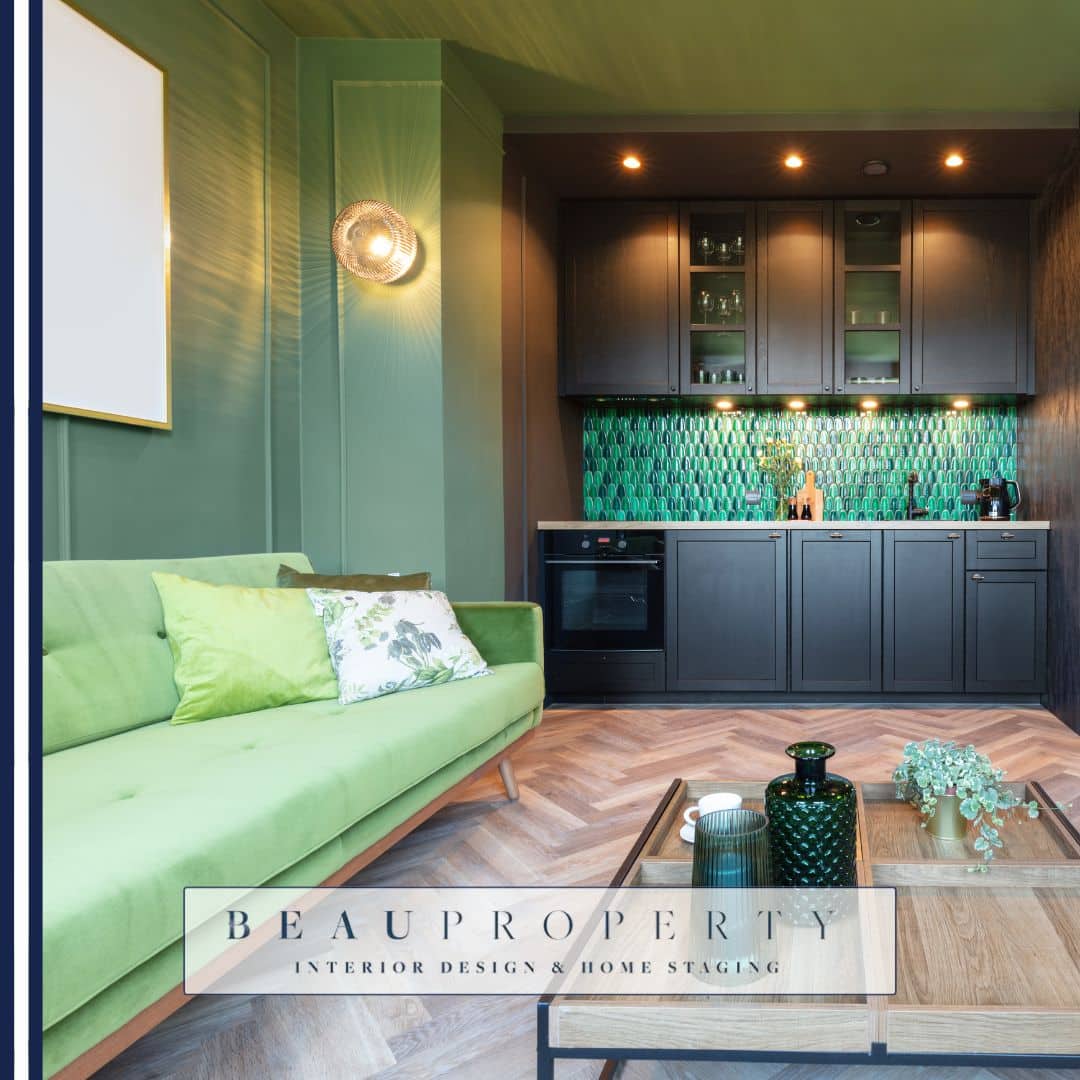
Where Virtual Staging Excels
Cost. Virtual staging is far cheaper than physical staging. The “95% cheaper” figure that circulates online is not drawn from any published UK study, and the real gap depends on how many rooms each approach covers. The saving itself is straightforward: virtual staging is priced per image, with no furniture to hire, deliver, install or collect.
Speed and flexibility. Turnaround is fast – usually two to five working days from receiving the photographs. If the market shifts or the property does not generate enough interest, images can be re-styled digitally without any logistical upheaval.
Vacant properties needing quick listing photos. For empty properties that need to go to market immediately, virtual staging provides furnished images for the portal listing within days rather than weeks.
Limitations to Consider
The viewing gap. This is the central challenge with virtual staging. A buyer scrolls through beautifully furnished images on Rightmove, forms an expectation, then walks into an empty property. That disconnect can be jarring, and it works against the emotional connection that drives strong offers.
Disclosure expectations. Rightmove’s property listing guidelines require that digitally altered images are clearly labelled. While this does not prevent virtual staging from being used, it does mean buyers know the furnishings are not real before they book a viewing.
No in-person impact. Virtual staging improves online marketing but does nothing for the actual viewing experience. The buyer still walks through empty rooms, and research consistently shows that empty properties sell more slowly and for less than staged ones.
The Numbers: What Does Each Approach Actually Cost?
Understanding the investment helps frame the decision. Rather than quote price ranges that date quickly, here is what actually drives the cost of each approach.
Virtual Staging: What Affects the Cost
| Service | What drives the quote |
|---|---|
| Virtual staging (per image) | The number of images, and the level of finish – simple furniture placement or fully styled, photoreal rooms |
| Whole-property virtual set | How many rooms are shown, and whether one scheme needs to run consistently across all of them |
| Turnaround | Usually a few working days from receiving the photographs, depending on how many images are needed |
Physical Staging: What Affects the Cost
| Service | What drives the quote |
|---|---|
| Consultation and styling plan | The size of the property and how much of it the plan covers |
| Partial stage (key rooms) | Which rooms are staged, and how much furniture and accessorising each one needs |
| Full property stage | The number of rooms, the size of the property and the style of furniture the target buyer expects |
| Show home staging (new build) | The number of plots or units, and the specification the developer wants to show |
| Furniture hire period | The length of the hire, agreed at the outset and extended if the sale takes longer |
| Turnaround | Usually one to two weeks for planning, sourcing and installation |
For detailed pricing tailored to your property, visit our pricing page.
Return on Investment
The cost difference is substantial, but so is the difference in results. The best UK evidence is the Home Staging Association UK & Ireland’s online survey of around 330 UK property professionals, run between January and April 2019. 86% said a staged home sells up to three times faster, and 94% of estate agents said staging increased the number of viewings. On price, 78% said staging raises offer value by up to 10% – but that headline hides the spread: 38% put the uplift at 1-3%, and only 16% at 7-10%. Two limitations apply: these are professional opinions rather than audited sale records, and the data is from 2019. Day-count comparisons and “sold at or above asking” rates that circulate online are not figures this survey produced, and we have not been able to trace them to a published UK source. The widely repeated “73% faster” claim is American – it comes from the US Real Estate Staging Association (roughly 41 days against 99) and is often recycled as if it were UK data.
Set that against the cost of staging for your own property. Even at the bottom of the survey’s range, a 1-3% uplift on a typical South East sale price is a meaningful sum, which is why the cost of a physical stage is best weighed against the likely difference in price rather than in isolation.
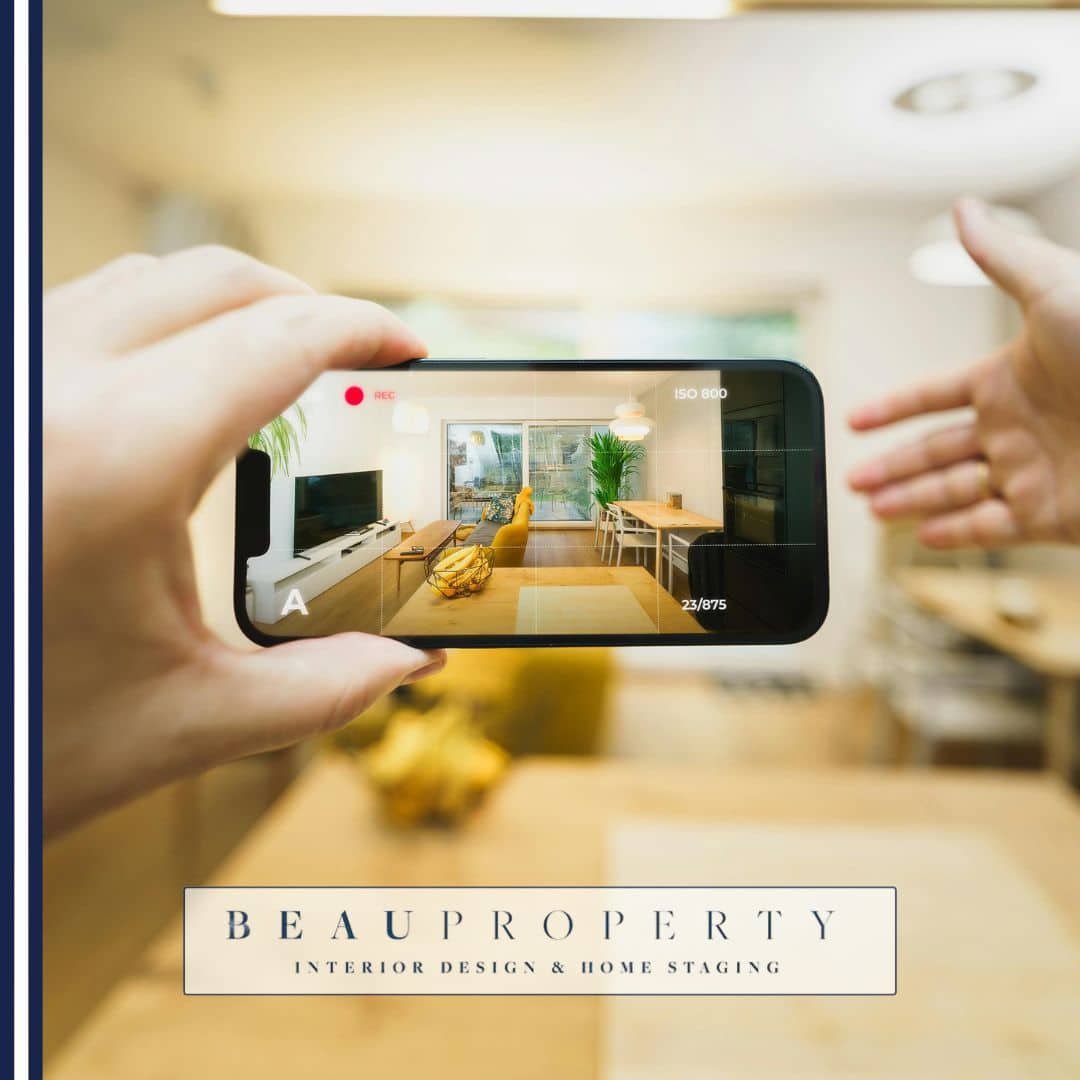
Decision Matrix: Which Method Suits Your Property?
Not every property needs the same approach. Here is a practical breakdown by property type and situation.
Vacant Properties
Recommended: Physical staging or hybrid approach.
Empty rooms feel smaller, colder, and harder to connect with. Buyers struggle to judge scale and layout without furniture. Physical staging transforms vacant properties more dramatically than any other scenario. If budget allows, this is where staging delivers the strongest measurable uplift.
If the budget is tight, a hybrid approach (see below) stages the key rooms physically while using virtual staging for secondary spaces in the online listing.
Occupied Family Homes
Recommended: Professional restyling (a form of physical staging).
Most lived-in homes benefit from a professional restyle rather than a full furniture installation. A stager works with your existing furniture, declutters, rearranges, and supplements with accessories and artwork to create a polished, market-ready look. Virtual staging is not relevant here because the rooms are already furnished – the task is to present what is there in the best possible light.
New Build Developments
Recommended: Full physical staging for show homes.
For developers marketing new build schemes, there is no substitute for a fully staged show home. Buyers purchasing off-plan need to see and feel the quality of the finished product. Physical staging of the show unit, combined with show home staging expertise, drives reservation rates and reduces cancellations.
Virtual staging or CGI renders can supplement this by showing alternative plot types and layouts that buyers can explore digitally, particularly when paired with 3D virtual tours of the staged show home.
Luxury and High-Value Properties
Recommended: Full physical staging.
At the upper end of the market, buyer expectations are high and competition between properties is fierce. Luxury buyers expect a curated, aspirational presentation. Virtual staging simply does not deliver the in-person experience that justifies a premium asking price. The investment in physical staging is proportionally small relative to the property value, and the risk of underselling far outweighs the cost.
Investment and Buy-to-Let Properties
Recommended: Virtual staging.
For landlords and investors selling tenanted or recently vacated properties, virtual staging often makes the most practical sense. The priority is usually speed and cost efficiency rather than maximising every last pound of sale price. Virtual staging provides attractive listing images at minimal cost, helping the property stand out on portals without the logistics of a physical installation.
Properties Needing Renovation
Recommended: Virtual staging or no staging.
If a property is being marketed as a renovation project, buyers expect to see the property’s bones rather than a polished presentation. Virtual staging can help them visualise the potential, but physical staging in a property that needs significant work can feel incongruous. In most cases, clear photography with a virtual “after” image is more effective.
Virtual Staging for Estate Agents
Estate agents tend to reach for virtual staging in a few specific situations, usually as a recommendation to the seller rather than a request from them.
- Vacant instructions that need to list quickly. An empty flat or a probate property can go live with furnished images while a physical stage would still be in planning.
- Rooms with an unclear purpose. A box room, a small second bedroom or an awkward open-plan corner reads far better when it is shown as a study, a nursery or a dining area, so buyers understand the layout at a glance.
- One set of images across every channel. The same staged images can be used on the portal listing, the brochure, the agent’s own website and social media, so the property is presented consistently wherever a buyer first sees it.
Two habits protect the agent as well as the seller. Label every virtually staged image clearly, and keep an unstaged photograph of each room in the listing, so the property matches what buyers expect when they arrive for a viewing. Our guide to how virtual home staging works covers disclosure and what separates good CGI work from poor work.
The Hybrid Approach: Best of Both
For many properties, the smartest strategy is not choosing one method exclusively but combining them.
A hybrid approach typically works like this:
- Stage the key rooms physically – living room, kitchen/dining, and master bedroom. These are the rooms where the in-person emotional connection matters most, and they provide the hero images for your Rightmove and Zoopla listings.
- Use virtual staging for secondary rooms – spare bedrooms, studies, or utility spaces that benefit from furnished images in the online gallery but are less critical to the viewing experience.
- Complement with a 3D virtual tour of the physically staged rooms to extend the reach of your marketing to remote and overseas buyers.
This approach captures the emotional impact of physical staging where it counts while using virtual staging to fill gaps in the online presentation at a fraction of the cost.
A hybrid package costs significantly less than staging every room physically, because only the rooms that matter most at a viewing are furnished – but it gives a far stronger overall presentation than virtual staging alone.
UK Buyer Behaviour: What the Portal Data Tells Us
Understanding how UK buyers actually search for property helps explain why staging strategy matters.
Rightmove dominates. Rightmove’s own published figure, based on Comscore data, is that over 80% of the time UK home-movers spend on property portals is spent on Rightmove – so for most buyers, the lead image on that listing is the first impression, and it often decides whether they click through at all. Professionally staged lead images consistently outperform empty room photography in click-through rates.
Mobile browsing is the norm. The majority of portal browsing now happens on phones. On a small screen, the difference between a staged room and an empty one is even more pronounced. Virtual staging produces images that perform well on mobile, but the advantage disappears entirely when the buyer arrives at an empty property for the viewing.
Viewings still close deals. Despite the shift towards online research, the physical viewing remains the decision point for most UK buyers. You may see a figure attributed to RICS claiming that fewer than 3% of buyers would purchase without a physical viewing; we have not been able to trace that survey, so treat the number with caution. The underlying point holds regardless: in the UK, very few buyers commit to a purchase without seeing the property in person. This is why the in-person experience – and therefore physical staging – remains so important to achieving the best price.
For a deeper look at how technology is changing property marketing while physical fundamentals remain constant, our guide to technology in home staging explores the landscape in detail.
Making Your Decision
The choice between virtual and physical staging ultimately comes down to three factors: your property type, your budget, and your priorities.
Choose physical staging if:
- You want the strongest possible sale price
- Your property is vacant and needs to feel like a home
- You are selling a high-value property where presentation is everything
- The viewing experience is central to your sales strategy
Choose virtual staging if:
- Budget is the primary constraint
- You need listing images quickly
- The property is an investment sale where speed matters more than maximum price
- You are marketing a renovation project and want to show potential
Choose a hybrid approach if:
- You want to balance impact with budget
- Some rooms are more important to stage physically than others
- You want strong portal images AND a compelling viewing experience
Whatever approach suits your property, getting the staging right from day one makes a measurable difference. Properties that launch well-presented attract more viewings, generate stronger offers, and spend less time on the market.
Ready to Stage Your Property?
At Beau Property Staging, we offer both physical and virtual staging services across Kent, Sussex, and Surrey. Whether you need a full physical stage, virtual images for a quick listing, or a hybrid approach tailored to your property, we will recommend the strategy that delivers the best return for your specific situation.
Get in touch through our contact page to discuss your property, or visit our pricing page for an overview of our packages.