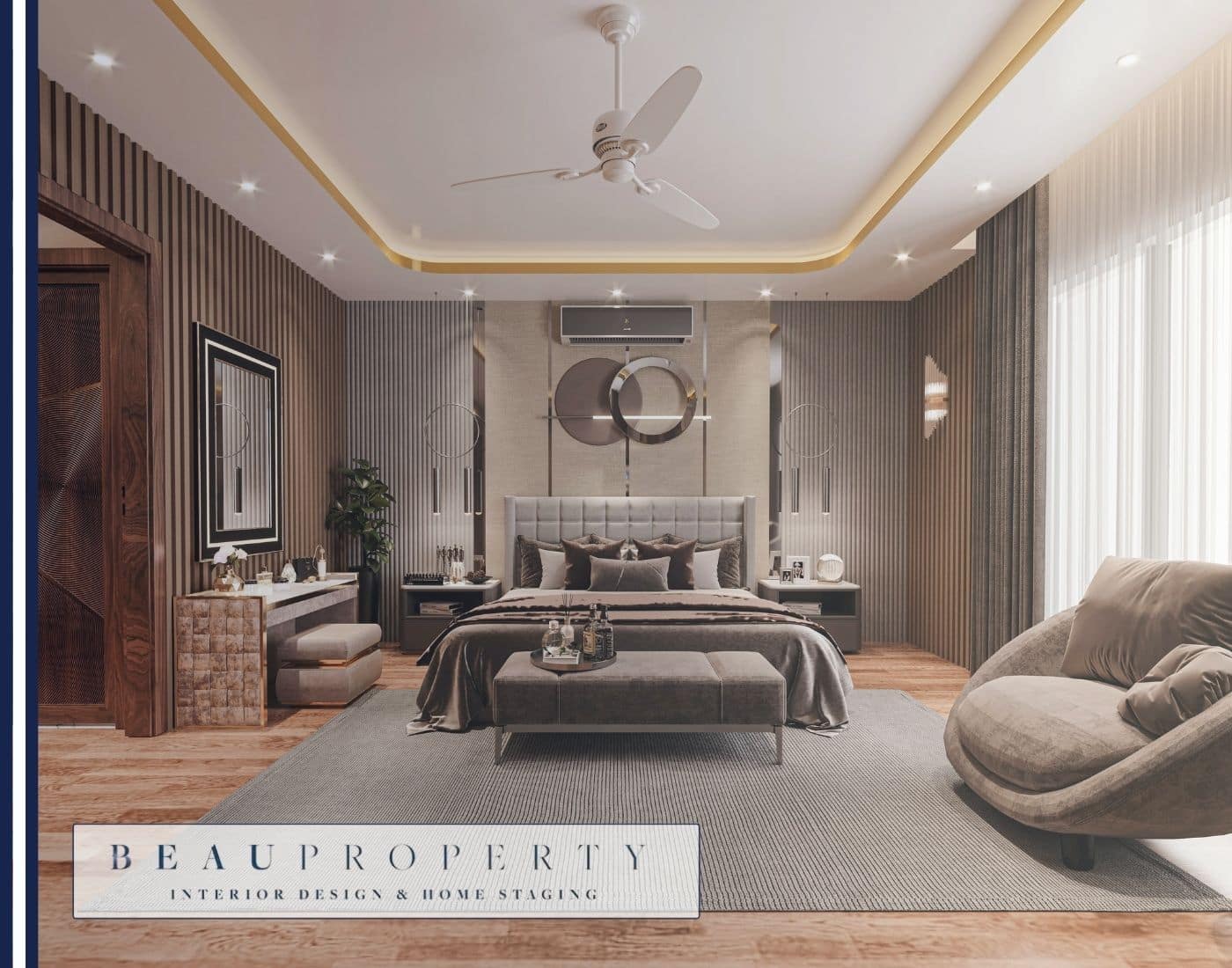
Home presentation decides how quickly your property sells and what offers it attracts. UK buyers form an opinion within the first 8 seconds of a viewing, and well over 90% decide whether to book that viewing from a 60-second scroll through online photos. Getting presentation right is not decoration. It is the marketing work that sets the ceiling on every offer that follows.
This guide covers what the art of home presentation actually means, the UK-specific data behind it, the professional process used by stagers, and the mistakes that quietly cost sellers money.
What is the art of home presentation for sale?
Home presentation is the preparation of a property for sale, combining deep cleaning, decluttering, neutralising decor, optimising lighting, and styling furniture so UK buyers emotionally connect with the space within the first few seconds of viewing. It is marketing, not decorating.
Decoration is done for the people who live in a home. Presentation is done for the people who do not live there yet. The two have opposite goals. A decorated home says “this is who we are.” A presented home says “this could be you.” Stripping out the first so buyers can picture the second is the entire craft.
Professional stagers treat each room as a scene. The story is the lifestyle a buyer wants, not the one the seller has. That distinction guides every decision from paint colour to the position of a chair.
Why does home presentation affect sale price and speed in the UK?
Presented homes sell 54% faster in the UK, averaging 45 days on market compared with 99 days for unstaged properties, and achieve sale prices 8-10% higher on average. In prime markets the price uplift climbs to 25%. Buyer behaviour is the reason: 85% of estate agents confirm staged properties sell quicker, and nearly all buyers filter their shortlist online before booking a single viewing.
The maths makes the case. A home valued at £300,000 and staged to a 10% uplift sells for £330,000, a £30,000 gain on a presentation budget typically between £500 and £5,000. Few investments in UK property return 6-60 times their cost.
There is a compounding effect too. Each week a property sits unsold costs the seller in mortgage interest, council tax, utilities and buyer confidence. A reduced sale time of 54 days saves roughly £3,000-£5,000 in carrying costs for the average UK home, on top of the price uplift itself.
What should you do before a single buyer walks through the door?
Order the EPC, commission professional photography, complete essential repairs, deep clean top-to-bottom, declutter by 30-50%, and depersonalise every room before the property is listed. This pre-marketing phase sets the ceiling for every offer. Photos go out once, and they define how the property is judged.
The pre-listing checklist:
- EPC certificate. UK law requires a valid Energy Performance Certificate before marketing begins. Book one at least a week ahead.
- Essential repairs. Fix leaky taps, squeaky doors, cracked tiles, peeling skirting, blown bulbs. Viewers treat small defects as signals of bigger ones.
- Deep clean. Book a professional end-of-tenancy-grade clean. Windows inside and out. Oven. Grout. Carpets steam-cleaned.
- Declutter by 30-50%. Every surface should show purpose and breathing space. Boxes to a storage unit, not to the loft or garage – both are inspection points.
- Depersonalise. Family photographs down. Fridge magnets off. Trophies, certificates, children’s drawings, religious items stored. The aim is neutral, not clinical.
- Neutralise paint. Bold feature walls and coloured ceilings shrink the buyer pool. Warm off-white or light grey broadens appeal.
- Professional photography. Listing photos are the single most important presentation asset. Amateur photos lose viewings before buyers ever see the property.
Allow two to three weeks for this phase. Rushing it is the single most expensive mistake a seller can make.
How do professionals present a home room by room?
Professionals assign each room one clear purpose, zone the space with furniture placement, layer lighting across ambient, task and accent sources, apply neutral colour schemes, and style each room with three to five curated accessories that suggest a lifestyle without crowding the eye. Buyers read rooms in seconds, so clarity wins.
Hallway and entryway. First impression sets tone for the whole viewing. Clear shoes and coats, add a runner, place a single statement piece above a console table. See the full entryway presentation guide for specifics.
Living room. Float furniture off the walls to create conversational groupings. Two seating zones in larger rooms, one in smaller. Throws and cushions in complementary (not matching) tones. More detail in the living room staging guide.
Kitchen. Clear every worktop except one or two styling pieces: a wooden board, a bowl of lemons. Clean the hob to a mirror finish. Hide bins, microwave and kettle where possible. The kitchen and family room carry most of the emotional weight of a sale.
Primary bedroom. Hotel-standard bed dressing: crisp white or stone bedding, layered pillows, a throw folded at the foot. Bedside tables symmetrical. Under the bed must be empty.
Bathroom. Spa presentation: fresh white towels rolled or folded, one plant, a tray with three styled items. No personal toiletries on show. The bathroom staging guide covers the full method.
Dining room. Table dressed for a meal buyers can imagine sharing. Placemats, glasses, a low centrepiece that does not block sightlines.
Home office. Clean desk, closed laptop, a plant, one framed print. Remove cables, paperwork and the chaos of daily work.
Apply a consistent neutral palette across the whole property. See the approach in the home staging colour schemes guide and the deeper read on colour psychology in staging.
How do you create kerb appeal that converts passers-by into viewers?
Kerb appeal converts online listings into booked viewings and on-arrival impressions into offers. Paint the front door, repair fencing, jet-wash paths and driveway, trim hedges, add matching planters either side of the entrance, and hide bins out of view. UK buyers form their opinion within 8 seconds of pulling up.
The exterior carries disproportionate weight because it is the first image on the listing and the first thing a buyer sees when they arrive. A tired front elevation signals neglect regardless of what is inside. The full method sits in the exterior staging and kerb appeal guide.
Priorities in order:
- Front door painted, handle polished, number visible.
- Path and driveway clean, weed-free, free of moss.
- Windows washed, frames free of cobwebs.
- Lawn cut, edges trimmed, borders tidy.
- Planters flanking the entrance, seasonal planting.
- Bins hidden behind a screen or around the side.
- Cars moved from the front of the property for photography.
What are the most common home presentation mistakes UK sellers make?
The most expensive mistakes are over-personalising rooms, over-cluttering surfaces, strong air fresheners that read as a cover-up, ignoring the exterior, listing with amateur photography, treating presentation as a cost rather than an investment, and staging for the photoshoot instead of for the viewings that follow. Each of these quietly reduces offers or lengthens time on market.
The pattern:
- Family photographs left on display. Buyers stop picturing themselves in the home and start feeling like guests.
- Cluttered surfaces. Every item on a worktop shrinks the perceived space.
- Strong air fresheners or scented candles. Smells that feel like cover-ups do more harm than a house that smells of nothing.
- Ignoring the exterior. Sellers pour effort into the interior and skip the front garden. Half the listing photos are exteriors.
- Amateur phone photography. Low light, fisheye distortion and phone camera tones cost viewings before buyers see the interior.
- Treating staging as an expense. The correct frame is return on investment. A £1,500 staging budget that unlocks a £20,000 higher offer is not a cost.
- Staging for the photos only. Once a viewing is booked, buyers walk into the real property. If the styling has been taken down, the gap disappoints.
Avoiding these seven is worth more than any additional technique.
Should you hire a professional home stager or do it yourself?
DIY presentation works for budget-conscious sellers in strong markets where demand is doing the heavy lifting. Professional staging works when the sale price justifies the £500-£5,000 investment, typically on UK homes priced above £400,000 where the percentage uplift returns 5-10 times the stager’s fee. The right answer depends on property value, market conditions and seller time.
| Factor | DIY presentation | Professional staging |
|---|---|---|
| Typical cost | £0-£500 | £500-£5,000+ |
| Time commitment | 40-80 hours of seller time | Seller minimally involved |
| Result consistency | Variable | Trained eye, repeatable method |
| Best for | Properties under £400k in strong markets | Properties £400k+, slower markets, empty homes, probate sales |
| Typical ROI | 2-5x on effort | 5-10x on fee |
The honest decision rule: calculate 10% of the asking price. If that figure is meaningfully higher than the staging fee, professional staging pays for itself. For homes £500,000 and above, it nearly always does. The full analysis of home staging as an investment breaks this down further.
How long should the home presentation process take?
Allow two to three weeks for full home presentation before listing. Week one handles repairs and deep cleaning, week two handles decluttering and neutralising, and week three handles styling, professional photography and the listing going live. Rushed presentations cost sellers both time on market and final sale price.
Week one. Book the EPC. Complete all repairs. Deep clean the entire property. Clear loft, garage and sheds of anything non-essential.
Week two. Declutter every room by 30-50%. Depersonalise. Repaint any bold walls to neutral. Remove or rehome anything broken, dated or distracting.
Week three. Style each room. Add fresh flowers, styled trays and final soft furnishings. Book professional photography, including exterior and wide-angle interior shots. Brief the agent. Go live.
This sequence matters. Photography before decluttering wastes the photo shoot. Styling before repairs means moving everything twice. Doing the exterior last leaves the most important shot exposed to a grey day and a deadline.
For the UK market context behind these timings, see the UK housing market overview for home staging in Sussex, Surrey and Kent and the financial impact data on staged UK sales.
Frequently Asked Questions
How much does professional home staging cost in the UK?
Professional home staging in the UK typically costs between £500 and £5,000, with most three-bedroom family homes falling in the £1,500-£3,000 range. Pricing depends on property size, whether furniture is hired in for empty properties or worked with existing items, and the length of the staging rental period. Empty-house staging carries the highest cost because it includes furniture rental, usually on a six to twelve-week contract.
How much more does a staged home sell for in the UK?
UK home staging data shows a typical sale price uplift of 8-10%, with prime markets reaching up to 25%. On a £300,000 home that translates to £24,000-£30,000 extra on the sale price. Alongside the higher offer, staged properties sell roughly 54% faster, averaging 45 days on market instead of 99, which reduces carrying costs by thousands of pounds.
What is the difference between home staging and interior design?
Home staging prepares a property for sale and is temporary, neutral and designed for the broadest buyer pool. Interior design creates a permanent home for the people living in it and reflects personal taste. A stager’s job ends when the property sells; a designer’s job ends when the client loves where they live. The skills overlap but the brief is the opposite.
Can you stage an empty house for sale?
Yes. Empty-house staging is one of the highest-return forms of presentation because empty rooms feel smaller, colder and harder to picture living in. Professional stagers bring in furniture, art, lighting and accessories on a short-term rental basis, typically six to twelve weeks. The guide to empty house staging covers the full method.
Does home presentation matter if the property market is strong?
Yes. A strong market lifts all properties, but the gap between the best-presented and the average-presented widens, not narrows. Well-presented homes in a hot market attract multiple offers and sell above asking; poorly presented homes in the same market attract below-asking offers because buyers assume there must be issues. Presentation is the lever that decides whether a rising tide lifts your property more or less than the market average.
Present Your Property With Beau
Beau Property Staging prepares UK homes for sale across Kent, Sussex and Surrey. From full-house professional staging to empty-property styling and pre-listing consultations, we turn the research above into finished rooms that sell. To discuss presenting your property, get in touch.