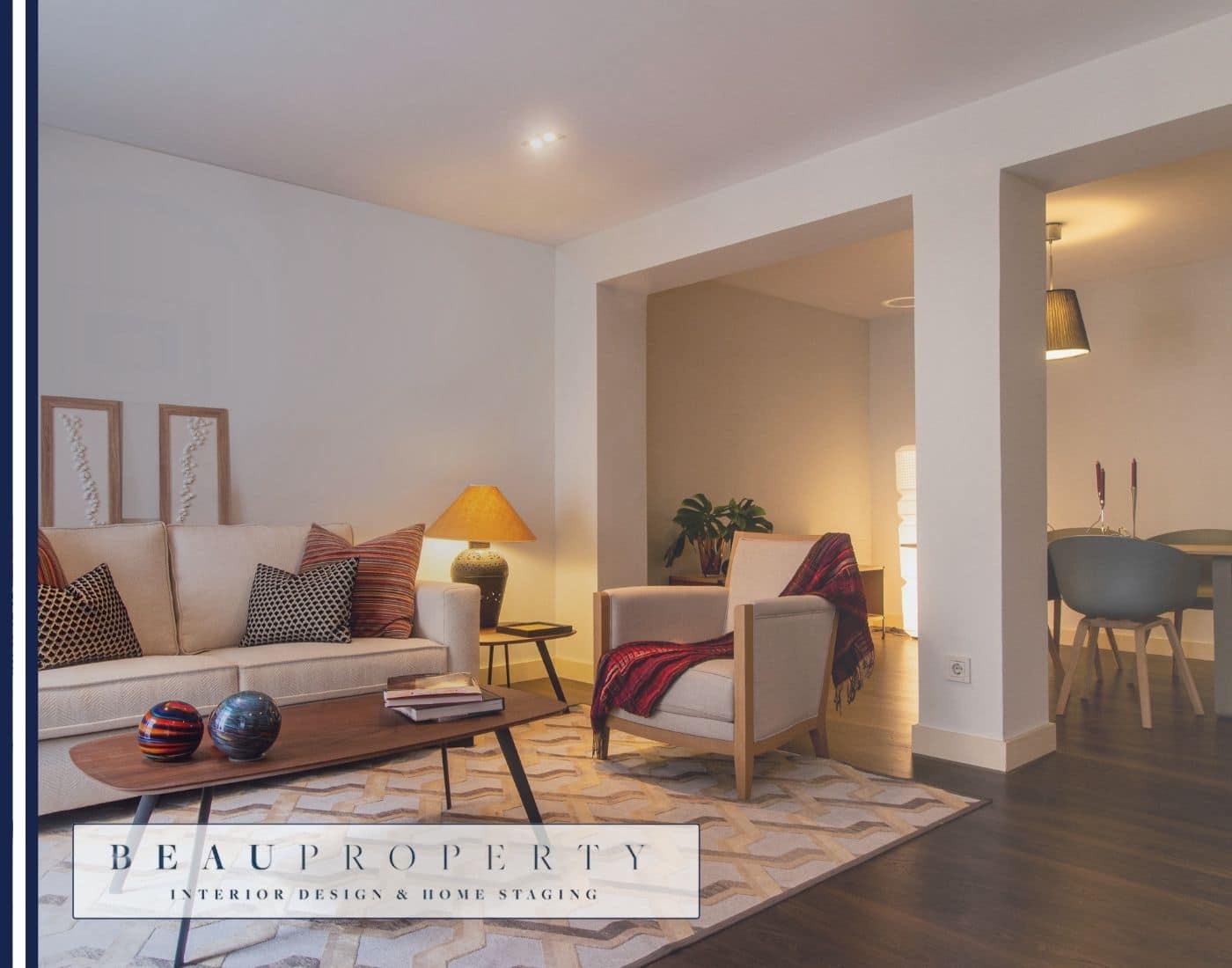
Lighting decides how a home feels the moment a buyer walks in, and it decides how a home looks on Rightmove before anyone even books a viewing. Get it right and a two-bedroom terrace feels warm, roomy and cared for. Get it wrong and the same house looks cramped, tired and cold.
This guide is the Beau Property Staging playbook for lighting a UK home for sale. It covers the three layers every staged room needs, the bulb colour and brightness specs that photograph well, and a season-by-season adjustment plan tied to British daylight hours and the BST clock changes. Everything here is tuned to how UK buyers actually see homes, whether on a portal listing or a dusk viewing in November.
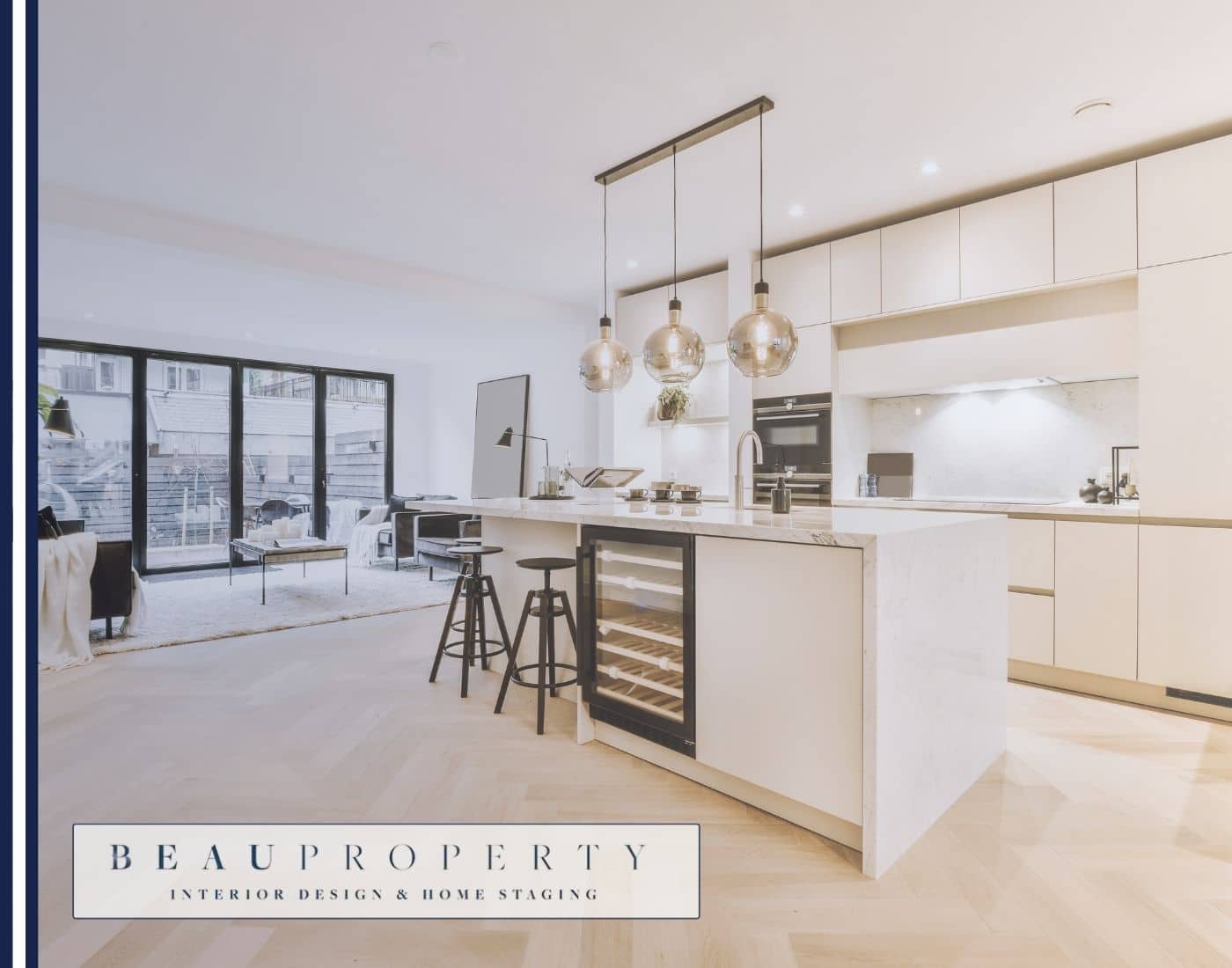
Why does lighting matter so much when selling a UK home?
Lighting changes how big, warm and well-kept a room feels, and most UK autumn and winter viewings happen under low natural light. Dim listing photos get scrolled past on Rightmove, and dark viewings in person feel smaller and colder than the same room at midday.
Buyers judge a home in seconds. Estate agents advise sellers to have every lamp on and every curtain open before a viewing for a reason: the brain reads a well-lit room as cared-for and a shadowed room as neglected, even when the underlying property is identical. The listing photo is the bigger multiplier. A buyer scrolling Rightmove spends roughly a second on each thumbnail, so a dull or yellow-cast hero image loses the click before the features list is even read.
The lighting choices that work for photography, for daytime viewings and for evening winter viewings are not always the same. That is why this guide is built around seasons, not generic tips.
What are the three lighting layers every staged room needs?
A staged room needs three layers: ambient lighting for overall brightness, task lighting for specific activities, and accent lighting to draw the eye to features. Together they remove shadows, add depth and make a space feel finished rather than lit by a single ceiling bulb.
Ambient lighting
Ambient lighting is the main source, ceiling pendants, chandeliers, recessed downlights or flush-mounted fittings. It sets the overall brightness of the room. In UK homes the most common ambient sources are a central pendant in living and bedroom spaces and recessed LEDs in kitchens and bathrooms. A single overhead fitting rarely flatters a room on its own, which is why the other two layers matter.
Task lighting
Task lighting illuminates where work happens. Under-cabinet strip lighting in the kitchen, a desk lamp in a home office, reading lamps flanking a bed, and directional vanity lights in a bathroom are all examples. In a staged home, task lights double as atmosphere: a glowing reading lamp in a corner makes a room feel lived-in rather than showroom-empty.
Accent lighting
Accent lighting highlights features, artwork, a fireplace, shelving or an architectural detail. Picture lights, spotlights and backlit alcoves work well here. Accent lighting is the fastest way to add depth to a flat-looking room, which is especially useful in photos where a single flat layer of light reads as dull.
John Lewis, Dunelm and B&Q all stock affordable layered sets that work for staging without committing to a permanent fixture change. Freestanding lamps are often a better investment than new ceiling fittings, because they leave with you.
What colour temperature should you use when staging a home for sale?
Use 2700K to 3000K warm white for living rooms, bedrooms and hallways, and 3000K to 4000K for kitchens and bathrooms where task visibility matters. Keep every bulb in the same room at the same colour temperature. Mixing warm and cool bulbs in one space is the single most common mistake sellers make.
Colour temperature is measured in Kelvin (K). Lower numbers are warmer and more yellow; higher numbers are cooler and more blue. Here is the practical map for staging a UK home:
| Room | Recommended Kelvin | Why |
|---|---|---|
| Living room | 2700K – 3000K | Warm, cosy, photographs well for listings |
| Bedroom | 2700K | Softest, most restful feel |
| Hallway / entry | 2700K – 3000K | Welcoming first impression |
| Kitchen | 3000K – 4000K | Brighter task visibility, still not clinical |
| Bathroom | 3000K – 4000K | Clean and fresh without a cold blue cast |
| Home office | 3500K – 4000K | Alertness, reduces eye strain in photos |
Brightness is a separate measurement. Lumens tell you how much light a bulb produces, a good ambient fixture in a UK living room typically runs 400-800 lumens per bulb, with a total of around 2000-3000 lumens across the whole room once lamps and ceiling lights are combined. A “60W equivalent” LED is roughly 800 lumens.
The consistency rule matters more than the exact Kelvin figure. If a living room has one warm 2700K floor lamp and one cool 5000K ceiling bulb, the space reads as awkward in photos and uncomfortable in person. Walk every room, check every bulb, and replace any that do not match.
How should lighting change between the four UK seasons?
UK seasons change natural daylight dramatically, London has about 7 hours 50 minutes of daylight on 21 December and around 16 hours 38 minutes on 21 June. Lighting strategy shifts accordingly: spring and summer focus on maximising and managing natural light, while autumn and winter focus on layered warm artificial lighting for dark viewings.
The BST clock change is the practical anchor. In 2026 the clocks go forward on Sunday 29 March and back on Sunday 25 October. That is the moment a seller’s lighting plan should be reset.
Spring (late March to May)
After the March clock change, evenings get usefully lighter week by week. This is the easiest season to list because daytime viewings photograph well with minimal effort.
Focus on:
- Clean every window inside and out. Winter grime has built up and dulls incoming light.
- Swap heavy winter drapes for sheer or light-coloured curtains to maximise daylight.
- Audit bulbs that yellowed over winter, older halogens and some LEDs shift colour as they age. Replace any that no longer match their neighbours.
- Book viewings for the brightest part of the day where possible, often late morning through mid-afternoon.
Summer (June to August)
Peak daylight runs 16 hours plus in the south east. The risk in summer is harsh glare and overexposed photos, not darkness.
Focus on:
- Sheer curtains or light-filtering blinds to diffuse strong direct sunlight.
- Close south-facing curtains slightly in the middle of the day for listing photography, then open everything for viewings.
- Add outdoor lighting for evening viewings, path lights, lanterns or subtle uplighters on mature planting. A garden that looks alive at dusk sells.
- Replace any blown exterior bulbs. Summer is when buyers check the garden.
Autumn (September to late October)
Autumn is the most under-staged season and the one where lighting effort returns the biggest uplift. Daylight is noticeably shortening, viewings start slipping into dusk, and the BST clock change on 25 October shifts the afternoon slot straight into darkness.
Focus on:
- Introduce warm accent lighting, table lamps in corners, a lit picture light over the mantel, floor lamps flanking the sofa.
- Switch to warm-white 2700K bulbs throughout if the house had any cooler summer-leaning bulbs in service.
- Book viewings earlier in the afternoon where possible, while daylight still holds. After the clock change in late October, aim for late morning slots.
- Safely lit candles on kitchen or dining surfaces add atmosphere for evening viewings.
Winter (late October to February)
Once the clocks go back on 25 October, a large share of UK weekday viewings happen after dusk. Winter lighting is the difference between a home that feels cosy and one that feels gloomy.
Focus on:
- Every lamp, hallway light and exterior fitting on before the buyer arrives, ideally 20 minutes before.
- Warm-white 2700K bulbs in every living space. Avoid cool white anywhere a buyer will sit or stand.
- Replace blown bulbs the week before, not the day of, a tripped fuse during a viewing is a memorable negative.
- Path and entrance lighting on. A dim driveway makes a winter viewing start on the back foot.
- Curtains open until the moment the last of the light fades, then drawn neatly, never half-shut.
- Consider battery-powered LED candles on mantels and shelves. Safer than open flame on a hosted viewing.
How do you brighten a dark or north-facing room for viewings?
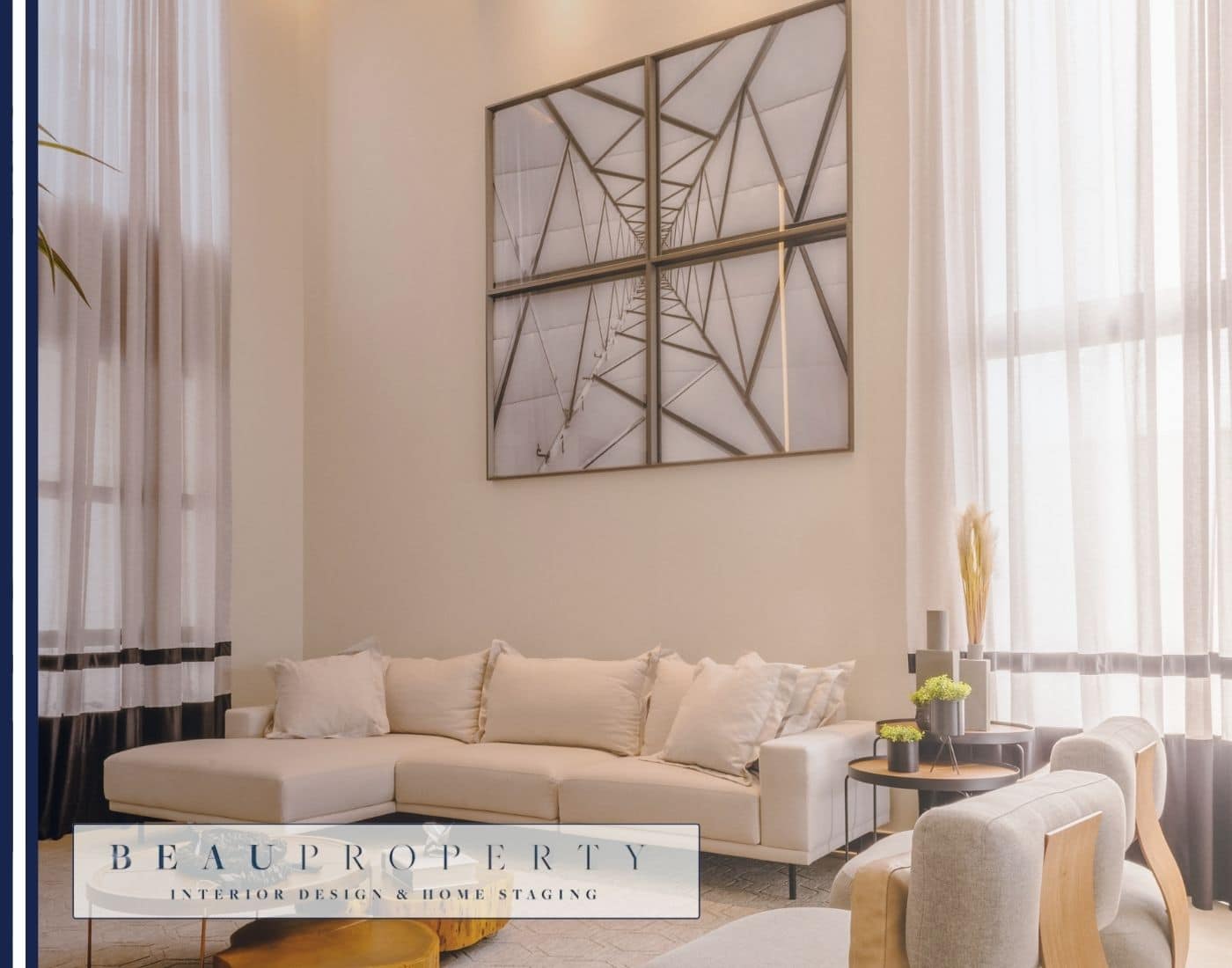
Brighten dark rooms with mirrors opposite windows, pale walls, reflective surfaces, higher-lumen lamps and at least three light sources per room. A north-facing room will never look south-facing, but layered warm light and a reflective bounce can add what feels like a stop of exposure to buyers and cameras alike.
North-facing rooms get soft, cool, consistent daylight. That is often flattering for a photograph, but it reads as flat and dim in person. The fixes are:
- A large mirror directly opposite the main window bounces available light deeper into the room.
- Light, matt paint finishes on walls and ceilings. Gloss reflects hotspots; matt diffuses evenly.
- Pale rugs, cushions and throws reflect rather than absorb. A charcoal sofa under a pale throw photographs lighter than a charcoal sofa alone.
- Three light sources per room as a minimum, one overhead, one lamp, one accent. Four is better.
- Higher-lumen bulbs where ambient is weak. A 1000-1100 lumen warm-white bulb pulls more weight than the standard 800 in a stubbornly dark corner.
- Avoid dark lampshades. They swallow the bulb output and create shadow pools.
Basement rooms, hallways with no windows and under-stair nooks benefit from the same rules, plus one extra: a wall sconce or picture light turns a transitional space into a feature instead of a dead zone.
Which UK fixtures and bulbs give the best return when selling?
LED bulbs are the highest-return swap before selling. They use up to 80% less energy than incandescent bulbs, last longer, photograph cleanly and contribute positively to a home’s EPC rating through the lighting assessment. Dimmer switches and one or two smart bulbs add polish without a full rewire.
Practical recommendations:
- LED swap: replace any remaining halogens or CFLs with LEDs matched to the Kelvin and lumen targets above. Most UK retailers (Screwfix, B&Q, John Lewis) stock warm-white 800-lumen LEDs for under £5 each.
- Dimmer switches: a single dimmer on the main living room pendant lets the same bulb cover daytime photography and evening viewing atmosphere.
- Smart bulbs: one or two smart bulbs (Philips Hue, Hive, Tapo) make it easy to pre-set viewing scenes. Useful if you are hosting viewings yourself rather than via an agent.
- Under-cabinet kitchen strips: cheap plug-in LED strips add the single biggest lift to kitchen photos and viewings. Under-cabinet light makes worktops gleam and the room read as larger.
- Picture lights: battery-operated picture lights with a warm LED clip to frames without wiring and instantly make art read as intentional rather than incidental.
A full lighting audit before listing costs little, especially if it mostly involves bulb swaps rather than fixtures. For a professional second opinion, our property staging service covers lighting as part of every presentation.
How do you prepare lighting on the day of a viewing?
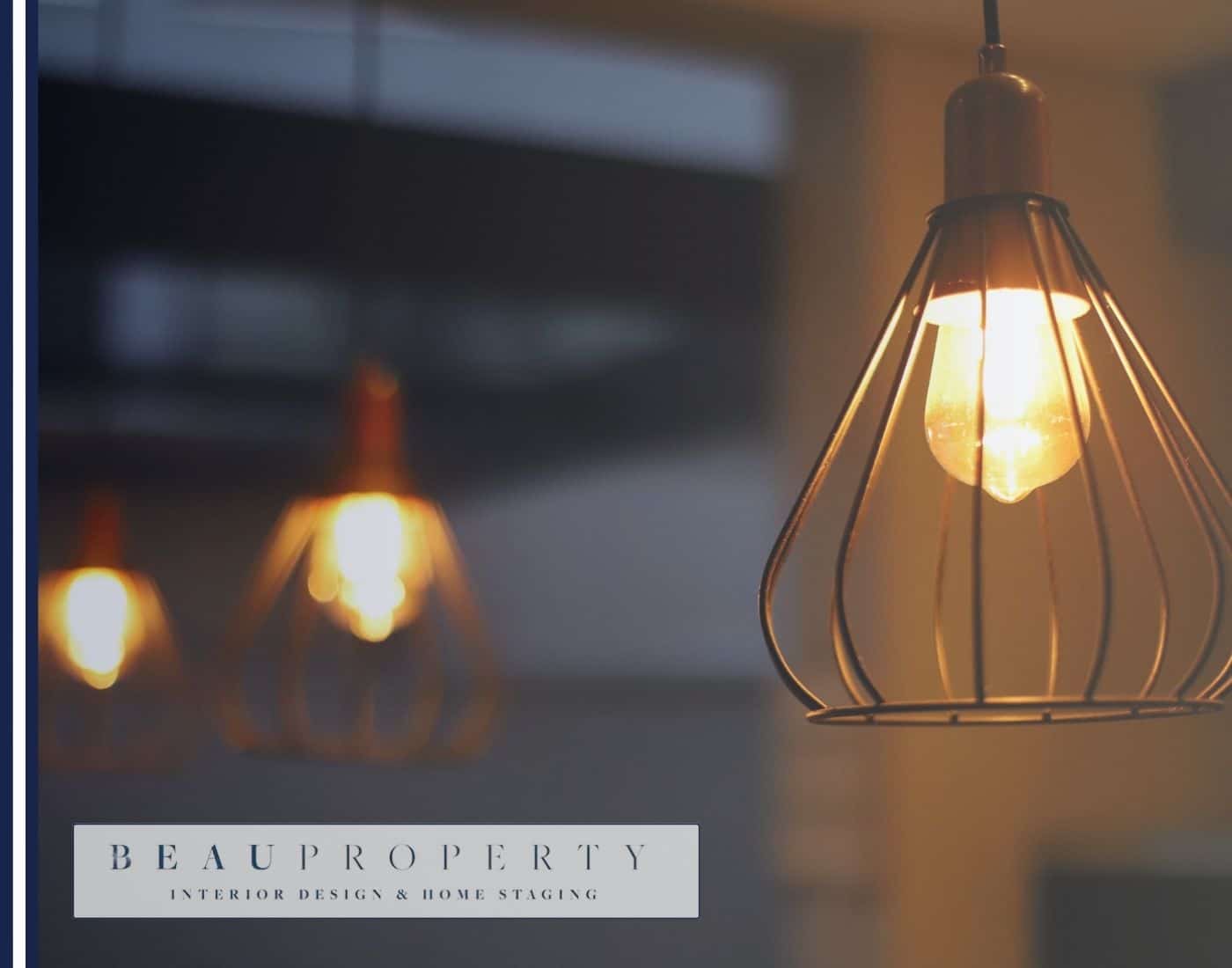
Twenty minutes before a viewing, walk through and switch on every lamp, open every curtain, test every exterior light and replace any blown bulb on the spot. The aim is for a buyer to walk in to a home that already feels alive, not one that someone is still setting up.
The pre-viewing lighting routine:
- Replace any blown bulbs that week. Do not leave this for the day of, it is the most common mistake.
- Twenty minutes before arrival: turn on every ceiling light, table lamp and floor lamp. Include rooms the buyer may only glance into.
- Open every curtain and blind to full. Even on a dull day, diffuse daylight is flattering and signals “we have nothing to hide”.
- Test exterior lights, porch, path, drive, garden. Swap out any that flicker.
- Candles if safe, warm-scented pillar candles on a mantel or dining surface for evening viewings. Battery LED candles are the risk-free alternative.
- Check for hotspots in photos. If a listing photographer is coming, walk the route with them first and spot any bulb that reads wrong on camera.
- Leave lights on during the viewing, even in rooms the buyer has already seen. A room the buyer can double back to should still be at full atmosphere.
Further reading: the winter staging guide for the seasonal specifics, and how to prepare your home for sale for the full seller’s checklist.
Frequently Asked Questions
What colour bulbs are best for selling a house in the UK?
Warm white LED bulbs between 2700K and 3000K are the safest choice for living rooms, bedrooms and hallways. Kitchens and bathrooms can run slightly cooler at 3000K to 4000K for task visibility. The most important rule is consistency, every bulb in one room should match. Mixing warm and cool bulbs in the same space is the most common mistake sellers make and it shows up immediately in listing photos.
Should you leave all the lights on during a property viewing?
Yes, every lamp, ceiling light and hallway fitting should be on from 20 minutes before the viewing until the buyer leaves, regardless of whether it is day or night. The goal is a home that looks and feels alive the moment they step inside. Leave them on even for rooms the buyer has already seen in case they double back.
How do you stage a dark room for photos?
Use a mirror opposite the window to bounce light, paint walls a pale matt finish, add three separate light sources (overhead plus two lamps), raise bulb brightness to 1000-1100 lumens in warm white, swap dark lampshades for pale ones, and include pale rugs and throws to reflect rather than absorb light. A photographer can also meter for the shadows to pull the room up in post.
What time of day should you book viewings in winter?
Late morning to early afternoon is ideal in UK winter. Daylight runs from roughly 8am to 4pm in December and early January, so a 10.30am or 1pm slot gives you the most natural light. After the BST clock change on 25 October, afternoon slots move into dusk quickly, so prioritise daylight viewings where the agent’s diary allows. For dusk and evening viewings, lean harder on the lighting preparation routine above.
Do LED bulbs improve your home’s EPC rating?
Yes, switching to low-energy LED bulbs is one of the measures assessed during an Energy Performance Certificate (EPC) inspection and contributes positively to the lighting component of the rating. The improvement is modest per bulb but adds up across a full house, and the EPC assessor will factor it in at the time of inspection. It is one of the cheapest pre-sale improvements you can make.