
Seasonal staging is the adjustment of a home’s palette, textiles, lighting and outdoor framing so the property reads correctly for the season a buyer walks into. It is not a full redecorate. It is the set of small, deliberate changes that keep a home feeling in step with what buyers see outside the window.
For UK sellers, the season matters more than most marketing guides admit. The Rightmove calendar, the school year, the weather and the daylight hours all shift what buyers notice first when they view a property. A sunlit garden does the heavy lifting in May. In November, the fireplace and the reading nook do. Seasonal staging lines the home up with whichever of those is doing the work on the day of the viewing.
This guide covers how staging changes across the four UK selling seasons, where the year-round fundamentals sit underneath the seasonal layer, and where to go next for tactical checklists for each season.
What is seasonal staging?
Seasonal staging is the practice of adapting a staged home’s colour palette, soft furnishings, scent, lighting and outdoor presentation to match the season in which the property is being marketed. It sits on top of core staging, which does not change, and targets the emotional cues buyers read during a viewing.
The core staging layer stays fixed across the year. Decluttering, neutral paintwork, clean flooring, good storage and considered furniture placement do the structural work. Seasonal staging sits above that layer and adds the touches that make a home feel current on the day of the viewing: lighter cottons and cut flowers in May, chunky throws and a lit hallway in November.
Seasonal staging is not the same as holiday staging. Holiday staging leans on occasion-specific decor (Christmas trees, Easter eggs, pumpkins) which can split buyer opinion. Seasonal staging works with the season itself, not the calendar festival, so it appeals across a wider buyer pool.
Why does the selling season affect staging choices?
The selling season affects staging choices because buyer volume, buyer motivation, daylight hours and what a home can physically show off all change month by month. Staging that flatters a property in a March viewing can read as cold or unfinished in October, and vice versa.
UK market data backs this up. According to Rightmove and Hamptons guidance, February and March consistently show the highest buyer enquiry volumes, and spring (March to May) sees the strongest success rate for homes listed to completion. Autumn (September to October) is the second-strongest window, driven by buyers wanting to complete before Christmas. Summer and winter are quieter on volume but often bring more motivated, less speculative buyers, which changes what staging needs to do.
Staging choices follow the same logic. In spring, the job is to match the optimism of a busy market and maximise the light that buyers associate with the season. In winter, the job is to make a cold, dark property feel safe and easy to move into. The same house, listed six months apart, needs different emphasis to land on the buyer in front of it.
For a full breakdown of when in the UK selling process to stage a home, see the guide on when to stage your home for sale.
How should you stage a home for spring?
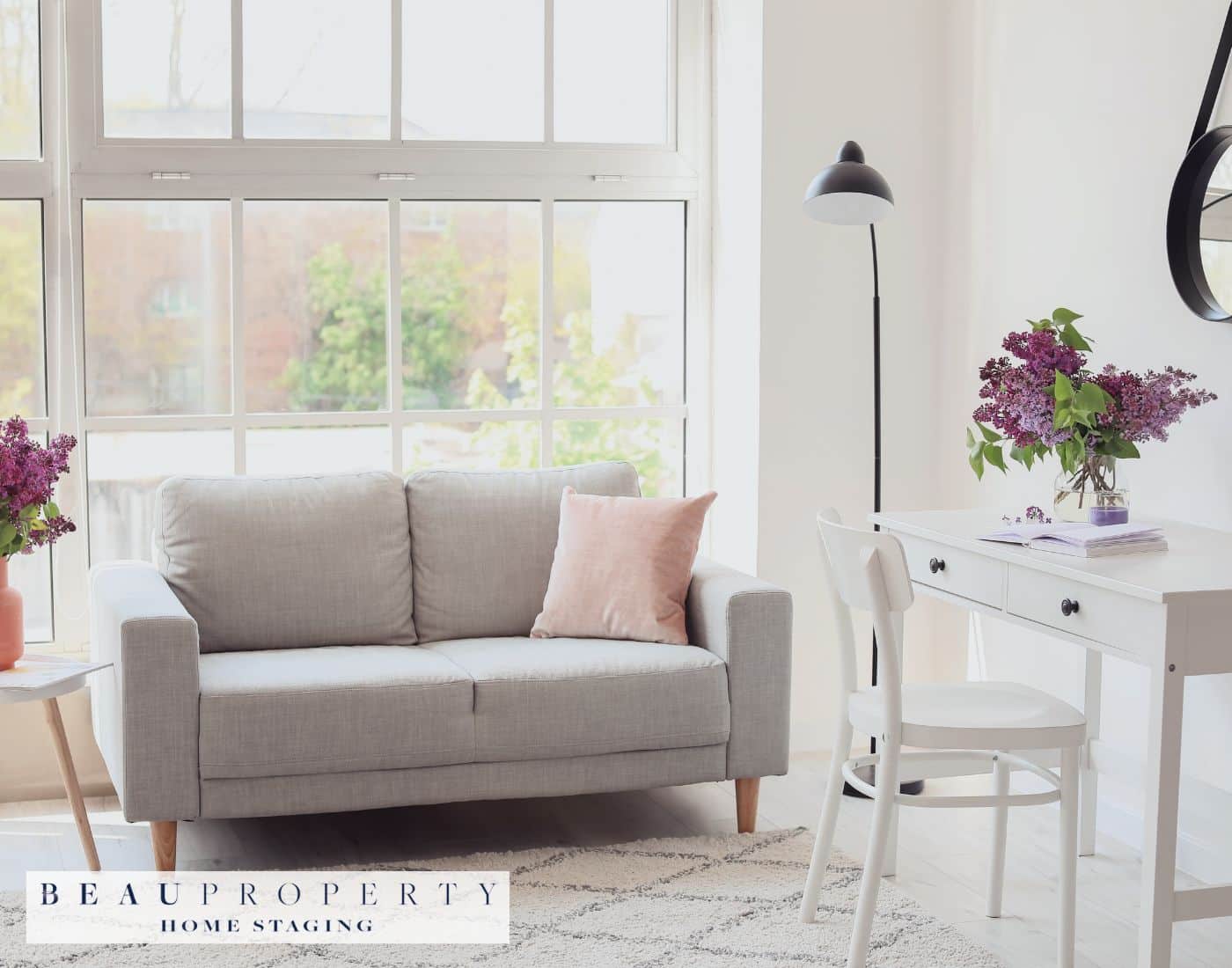
Staging a home for spring means leaning into natural light, soft greens and pastels, fresh flowers, a tidy garden and a sense of rejuvenation. Buyer volume peaks in this window, so the competition is higher and the staging bar rises with it.
Spring buyers are in planning mode. Many are targeting a summer completion around a school move or a new job, so they are reading properties for move-in readiness as much as for aesthetic appeal. Staging decisions should support both. Open the windows before viewings to clear winter air, replace heavy winter curtains with lighter drops, and put a small vase of daffodils, tulips or blossom in the kitchen and hallway.
Outside, the garden carries more weight than at any other point in the year. Mow the lawn, edge the borders, pressure-wash the patio and clear winter debris from paths. A single planter of seasonal flowers at the front door is often enough to lift the first impression.
Spring is also the season where the kitchen and the garden-facing rooms need the most work. These are the rooms buyers plan around when they imagine a summer in the home. Deep clean, decant countertop clutter, and open up sight lines from kitchen to garden wherever the layout allows.
Beau’s full checklist lives on the dedicated spring staging tips guide, which covers curb appeal, interior palette, the 3-foot / 5-foot staging rule and spring-specific ROI considerations.

How should you stage a home for summer?
Staging a home for summer means protecting a property from heat and glare, pulling outdoor spaces into the marketing, and switching to light, breathable textiles. The summer buyer pool is smaller than spring but often more motivated, so the staging job is precision rather than volume.
Summer light is unforgiving. It shows every mark on a floor, every smudge on a window and every dusty blind. The cleaning standard rises accordingly. Before photography and before every viewing, focus on floors, glazing, kitchen worktops and bathroom grout. Pull blinds back fully to let the light in, but add sheer curtains or lightweight linen where direct sun is causing glare in photos.
The outdoor room becomes the feature space. If there is a patio, terrace or garden, stage it as a second living room. Arrange outdoor furniture into a usable grouping, add cushions in a neutral palette, and keep the planting simple and green rather than heavily floral. Buyers should be able to picture Sunday lunch outside without mentally rearranging the space.
Inside, strip back the layered winter textiles. Swap heavy throws for cotton or linen, drop the soft furnishing count, and let the rooms feel airy rather than cosseted. Scent should be clean and subtle: cut grass, citrus, light florals. Avoid anything heavy.
The full summer tactical playbook is in the summer home staging guide, including colour palettes, seasonal accessories and the indoor-outdoor flow considerations specific to summer viewings.

How should you stage a home for autumn?
Staging a home for autumn means warming the palette, adding texture, making the most of shorter daylight hours and leaning into the cosy end of the year without tipping into full Christmas decor. Autumn buyers are often chasing a pre-Christmas completion, so the staging needs to feel move-in-ready and emotionally warm.
The autumn palette takes its cue from the season outside. Rusts, deep greens, burgundies, warm browns and muted golds work well, usually as accents rather than on the walls. Textiles do most of the work: a chunky throw over the sofa arm, a wool runner on a stripped floor, layered cushions on the bed. The aim is a home that looks like somewhere a buyer would want to come home to at five o’clock in October.
Lighting matters more in autumn than in any season other than winter. Daylight hours drop quickly from September onwards, and a home that photographed brightly in July can look dim by late October. Add lamps, switch to warmer-temperature bulbs (2700K to 3000K), and light hallways and landings that previously relied on daylight. For late-afternoon viewings, turn on every light in the house fifteen minutes before the buyer arrives.
Outside, clear fallen leaves from paths and driveways, cut back faded summer planting, and replace tired summer containers with autumn-tone planters of heathers, cyclamen or ornamental grasses. Keep decorations to one seasonal wreath or a small group of ornamental pumpkins. Anything more reads as Halloween, which narrows the buyer pool.
The full autumn breakdown, including texture layering, conversation-area composition and the outdoor-space framing, sits on the autumn staging tips guide.

How should you stage a home for winter?
Staging a home for winter means making a cold, dark, often wet property feel warm, safe and easy to move into. Winter buyers are the most self-selected of the year (viewing a house in January is a commitment), so the staging job is to reward them for showing up.
Warmth is the first priority, both real and perceived. Put the heating on for an hour before viewings. Light the fireplace if there is one. Layer textiles: throws on sofa arms, cushions on beds and reading chairs, a soft rug under the dining table. Scent the hallway lightly with something warm but clean, vanilla, cinnamon, or simmered orange. Avoid heavy artificial fragrance.
Light does more in winter than any other lever. With UK daylight dropping below eight hours by December, most viewings take place in low light. Switch on every lamp fifteen minutes before a viewing. Add a lamp to any corner that feels shadowed in photographs. Use warm-white bulbs throughout the home to match the seasonal mood.
Outside, keep paths clear, safe and presentable. Sweep leaves and grit icy sections. A single wreath on the front door and a planter of evergreens either side is usually enough (and neutral enough to appeal across all buyers, regardless of whether they mark Christmas).
Avoid heavy festive decoration. A tree that works for family life blocks sight lines that a buyer is trying to read. Keep any festive touches small, natural and clustered in one area rather than distributed through the home.
The full winter tactical guide is at winter staging, including cosy atmosphere building, outdoor considerations and the textile strategies specific to UK winter viewings.

Which seasonal staging principles apply year-round?
The year-round principles are decluttering, scrupulous cleaning, neutral backdrops, controlled lighting, fresh scent, clean curb appeal and considered furniture placement. These do most of the staging work in any season. The seasonal layer sits on top.
A staged home has to do two things before any seasonal layer is added. It has to feel spacious and clean, and it has to give the buyer a blank enough canvas to project their own life onto. That work is the same in January as in July. Decluttered surfaces, depersonalised display space, neutral paint, empty but styled storage and well-placed furniture all contribute year-round.
Lighting is the only year-round principle that does genuinely different work in different seasons. In summer, lighting is about controlling glare. In winter, lighting is about making a dark property feel warm and safe. The fittings stay the same; the bulbs, lamp counts and pre-viewing routine change.
For the full pillar on professional staging principles, see the art of home presentation for sale guide.
Does the UK selling season affect how much staging adds to sale price?
The UK selling season affects which aspects of staging do the most work, but the underlying uplift from professional staging is broadly consistent year-round. Industry reporting has long linked staged homes with faster sales and stronger offers across every season, with the emphasis varying by market condition.
Where the season does bite is in the staging brief itself. In a busy spring market, staging is often about standing out in a bigger listing pool, so the bar for photography, kerb appeal and outdoor presentation is higher. In a quieter winter market, staging is about removing buyer objections (it feels cold, it feels dark, it feels hard work to move in) so the emphasis shifts to warmth, light and move-in readiness.
The practical implication is that staging should always be briefed against the season and the local market, not against a generic “always stage like this” template. A property briefed for a March launch and staged in a muted summer palette will underperform against the same home staged in spring tones. Same budget, different outcome.
Frequently Asked Questions
When is the best season to sell a house in the UK?
Spring (March to May) is generally the strongest UK selling season, with the highest buyer enquiry volumes and the best listing-to-completion rates according to Rightmove and Hamptons data. Autumn (September to October) is the second-strongest window. Summer and winter are quieter on volume but often bring more motivated buyers, which is why well-staged properties can still do well in those months. Pricing matters more than timing, so a realistically priced home staged for the current season will outperform an overpriced home listed in the “right” month.
Do I need to restage when the season changes?
Most homes do not need a full restage when the season changes, but a staging refresh is often worth it. Swap soft furnishings (throws, cushions, table dressings), change scent, refresh cut flowers or foliage, adjust lighting and update the outdoor presentation. These adjustments take a fraction of the time of a full stage and keep photography and viewings feeling current. If a property has been on the market across two seasons, a staging refresh is a cheaper way to re-engage buyers than a price reduction.
Is seasonal staging worth it for a short listing window?
Yes. Seasonal staging is arguably more important for short listing windows than for long ones. When a property is being launched with the expectation of a quick sale, every viewing counts, and the emotional match between the home and the season the buyer walks into directly affects offer strength. A two-week launch staged for the wrong season often underperforms the same property staged correctly. For short windows, focus seasonal effort on the first impression (front door, hallway, main reception, kitchen) rather than every room in the house.
How far ahead of listing should I stage for the season?
Allow at least two weeks between staging completion and the first professional photography shoot, ideally three. This gives time for seasonal soft furnishings to settle, cut flowers or foliage to be replaced on a fresh cycle, and any outdoor staging (planters, patio dressing, lawn work) to mature. Photography should happen in the season the home is being marketed in, not in the previous one. A property photographed in March but listed in July will show spring light in the imagery, which undermines everything the on-the-day staging is doing.
Is holiday staging the same as seasonal staging?
No. Holiday staging layers on occasion-specific decor (Christmas trees, pumpkins, Easter displays) and can split buyer opinion. Seasonal staging works with the season itself (palette, textiles, light, scent, outdoor presentation) and appeals across a wider buyer pool. The two can coexist, but holiday decor should be kept small, neutral and clustered, so it doesn’t distract from the staged property itself or narrow the buyer pool unnecessarily.